 language
 English
 Русский
 España
 Français
 عربي
عربي
 中文版
中文版
Impact of the Environmental Code of China (Effective Aug 15) on Thermoforming (Blister & Cup‑Making) Industry

This regulation does not impose a full ban on PP, PET or PS plastics. It mainly targets non‑degradable single‑use plastic tableware (food containers, cups, bowls and lids) used for dine‑in and food delivery scenarios.
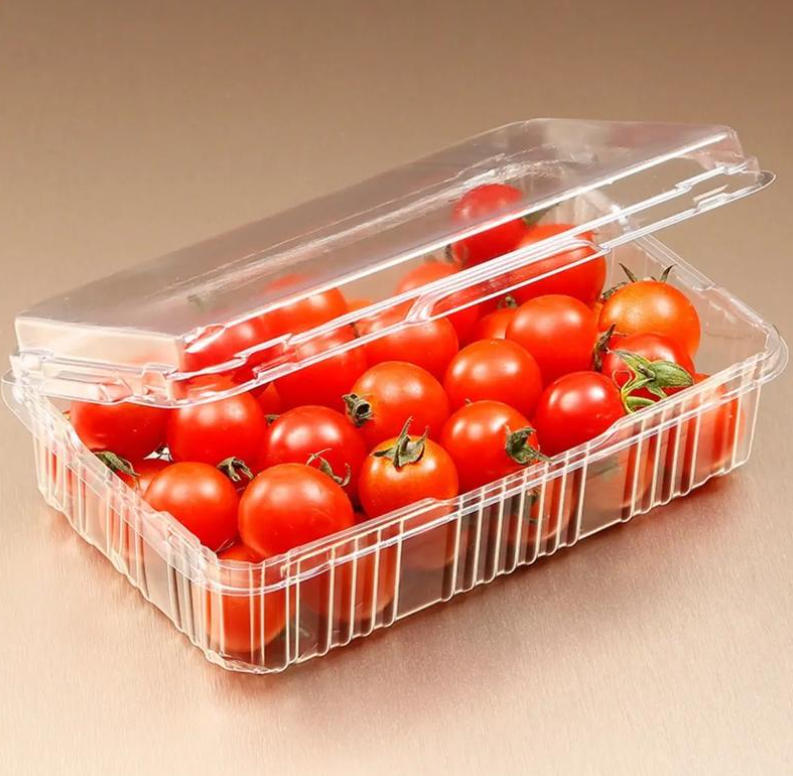
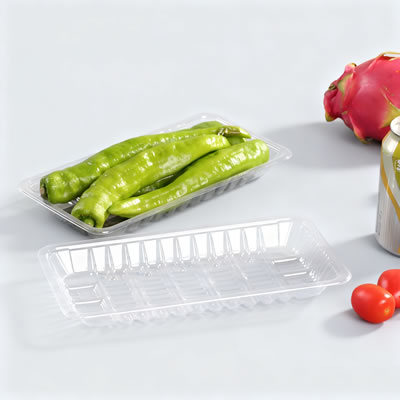
Industrial packaging, fresh‑keeping trays, sealed food packaging, dairy cups, frozen‑food packaging and supermarket inner‑liner packaging are exempted, provided they adopt single‑material design for easy recycling.
Penalties are upgraded from administrative circulars to legal liabilities. Enterprises in violation may face fines up to 100,000 RMB, marking significantly stricter law‑enforcement.
I. Impacts on Downstream Packaging Manufacturers (Our Customers)
1) Risks for Domestic Sales
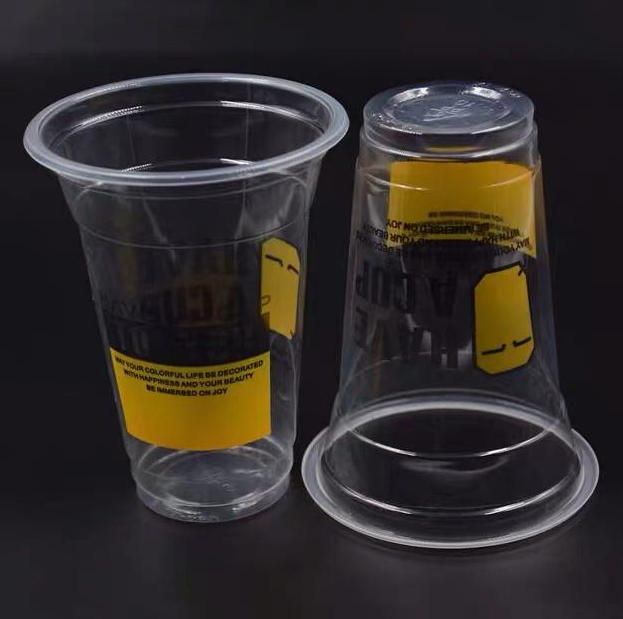
Single‑use PP/PS cups, lids and takeaway food containers for tea‑drink shops and food delivery are restricted for dine‑in & delivery channels. Many existing production lines manufacturing milk‑tea cups and takeaway containers are facing channel constraints and can no longer supply large volumes to food‑service delivery markets.
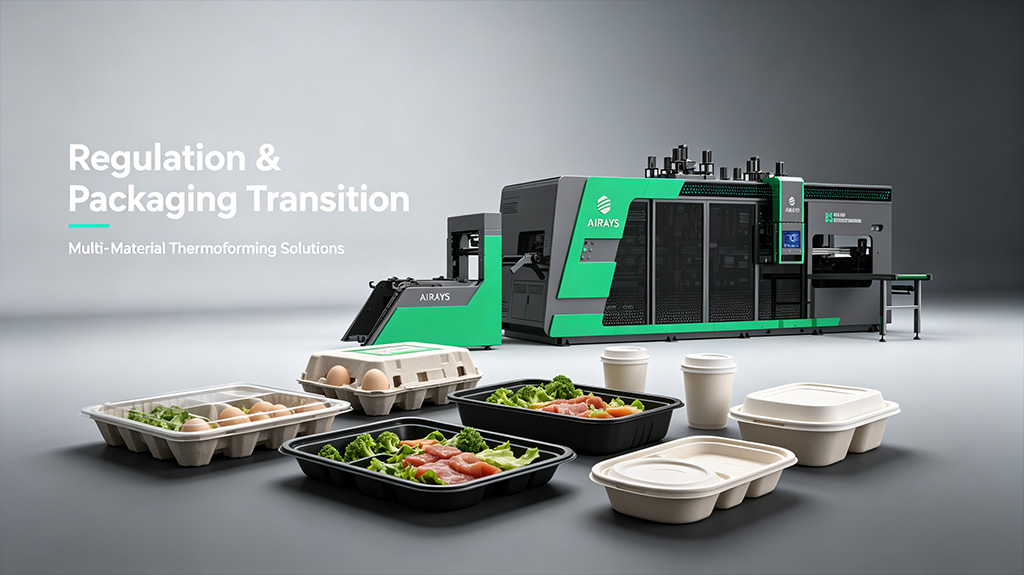
Note: It is not that machines cannot process PP material. Instead, end‑product application scenarios are restricted. Production of dairy cups, jelly cups, fresh‑produce trays and frozen‑food containers remains permitted. Products should preferably use single‑material formulas for recyclability. Starch‑blended modified materials shall be avoided, as they hinder recycling.
Two compliant solutions for downstream customers:
- Route A: Switch to PLA fully‑biodegradable sheets to produce degradable cups and containers for dine‑in & delivery use. PLA places drastically different requirements on thermoforming equipment regarding temperature control, heating profile, stretching and cooling. Running PLA on legacy machines tends to cause cracking, warping and defective forming.
- Route B: Manufacture easy‑to‑recycle single‑material products (r‑PET, virgin PP). Shift focus to industrial packaging, fresh‑food supermarket supplies and pre‑packaged sealed food sectors, stepping away from single‑use food‑service for take‑away beverages.
Higher risks for pseudo‑degradable products: Products merely blended with starch or oxo‑degradable additives are not legally qualified degradable goods. Violations trigger direct penalties. Downstream buyers will be more cautious when selecting raw materials and production equipment.
2) Market Opportunities
- Growing retrofitting demand for legacy lines: Many older blister and cup‑making machines feature basic temperature control and cannot stably run PLA degradable materials. This drives demands for equipment retrofitting or new‑machine replacement.
- Industry‑segment transition: Numerous factories are shifting from takeaway cups & containers to fresh‑produce trays, modified‑atmosphere packaging containers, industrial food packaging and cold‑chain packaging. Demand for multi‑station positive‑negative pressure thermoformers for trays & sealing boxes keeps rising. Cup‑making machines are increasingly deployed for yogurt cups, sauce cups and frozen‑food cups.
- Rising orders for r‑PET & r‑PP recycled‑material articles. Equipment must handle high‑content recycled resins, calling for enhanced temperature accuracy and sheet‑feeding stability.
3) Key Pain Points for Downstream Customers
- High raw‑material cost of PLA, together with challenges to maintain acceptable yield rate.
- Outdated heating modules on old equipment lead to high reject rates when processing degradable materials.
- Molds need to be re‑optimized for degradable materials in terms of stretching, venting and cooling performance.
II. Impacts on AIRAYS (Rayshape Machinery) as Equipment Supplier
✅ Opportunities
Multi‑material compatibility becomes a core selling point. When sourcing machinery, buyers no longer only focus on speed and cycle rate. They prioritize whether machines can stably process PLA / PBAT degradable resins and high‑content recycled r‑PET / r‑PP.
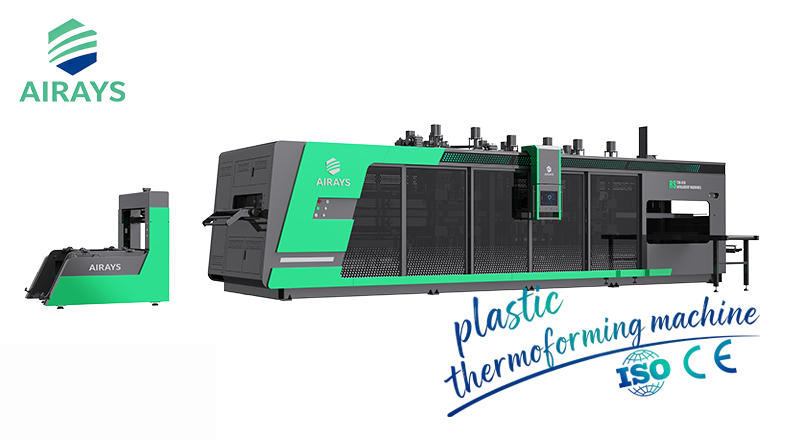
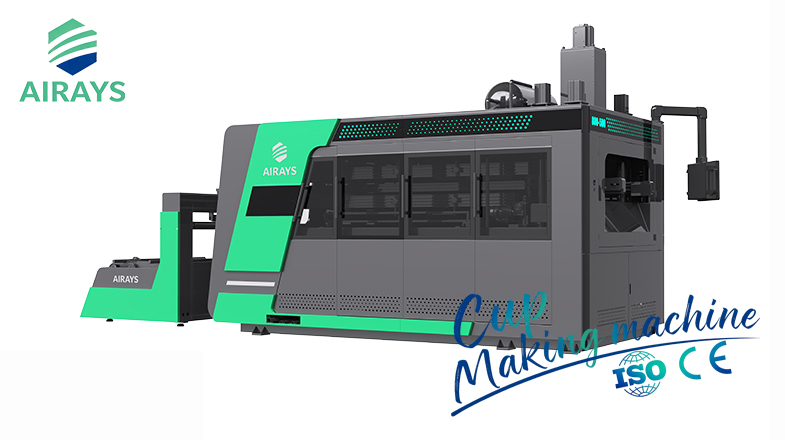
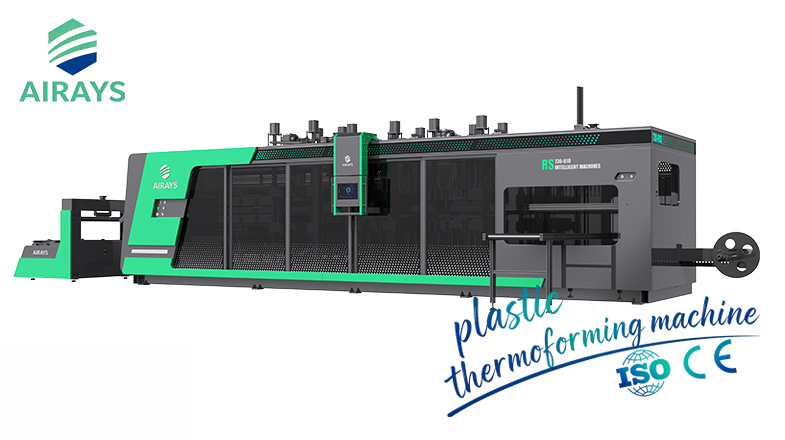
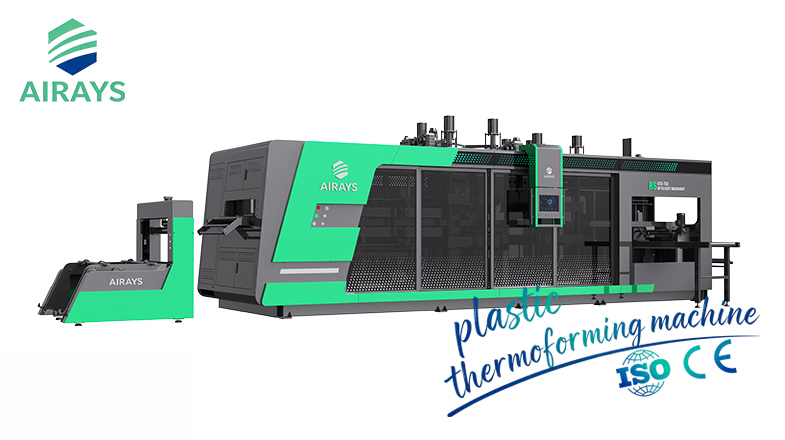
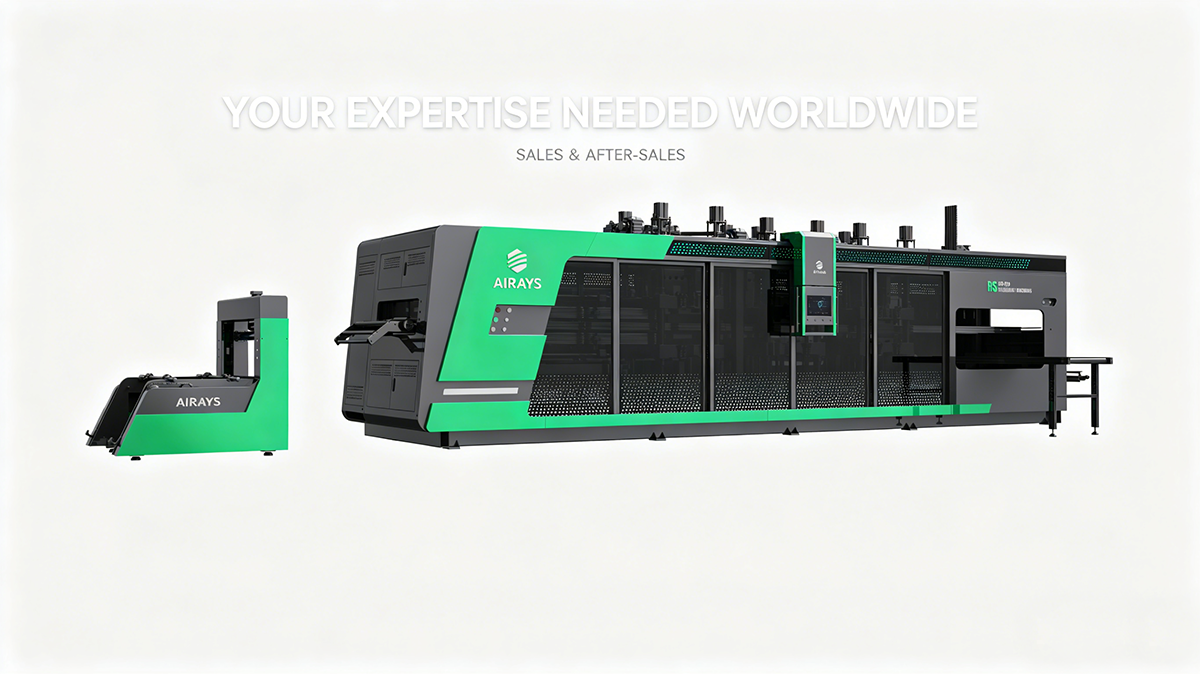
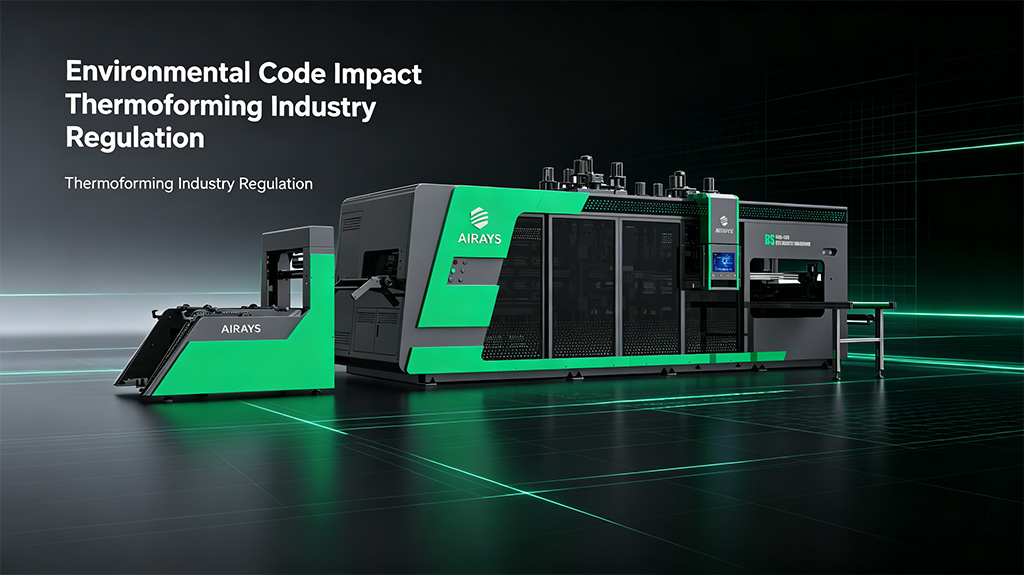
AIRAYS RS‑series multi‑station thermoformers and RSC‑series cup‑making machines are originally built for multi‑material processing. Distributed precision temperature control (±1℃) with independent zone heating enables stable forming of degradable materials — this shall be highlighted in external promotion.
Shift in equipment requirements
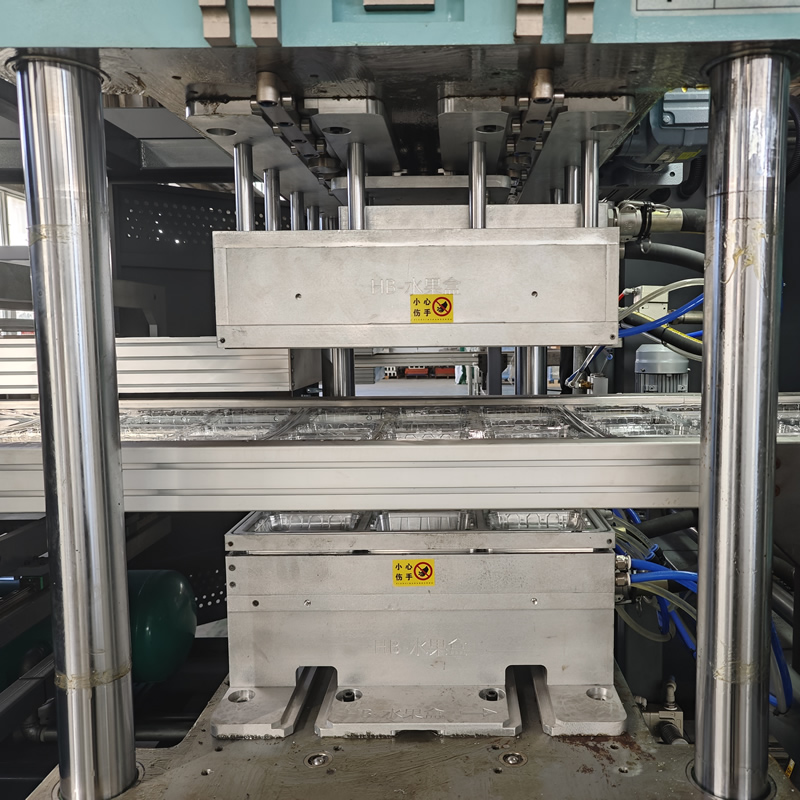
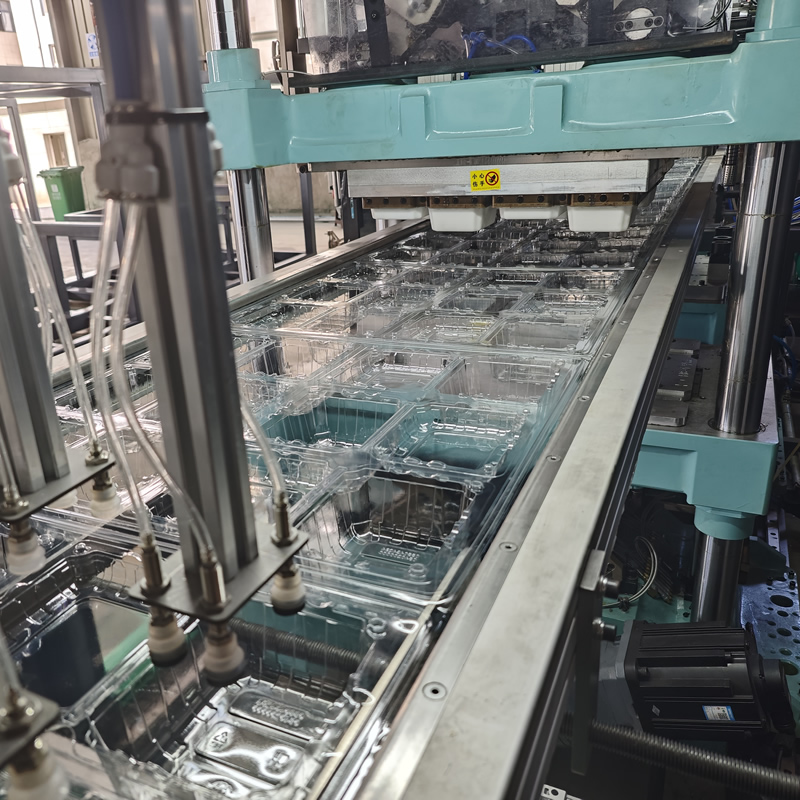
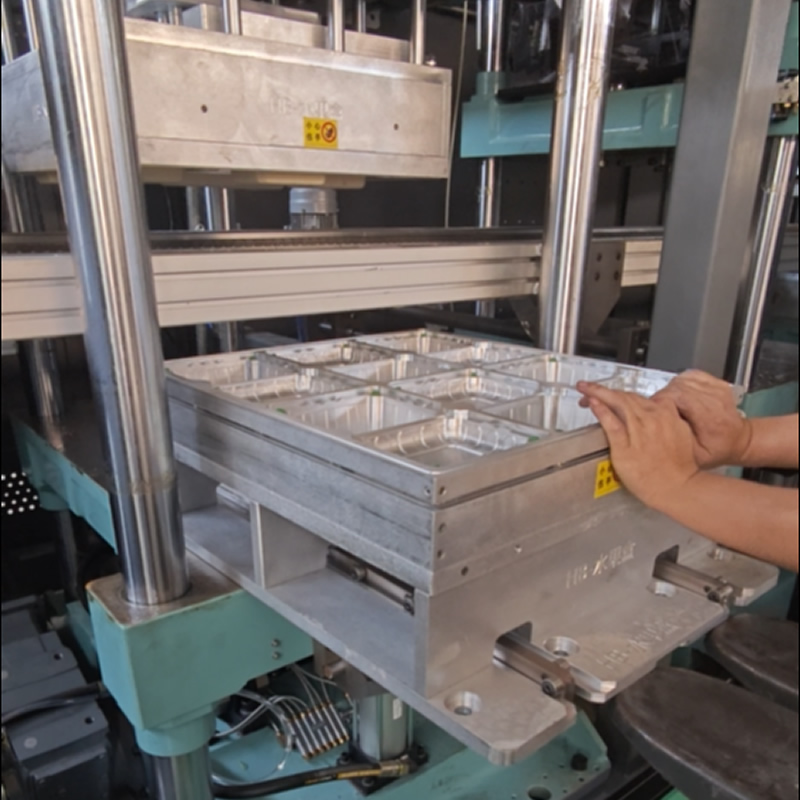
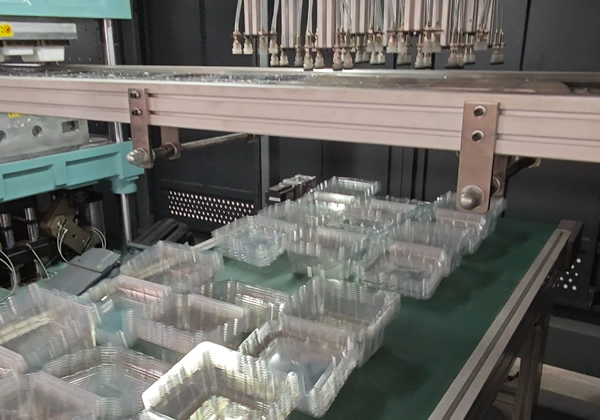
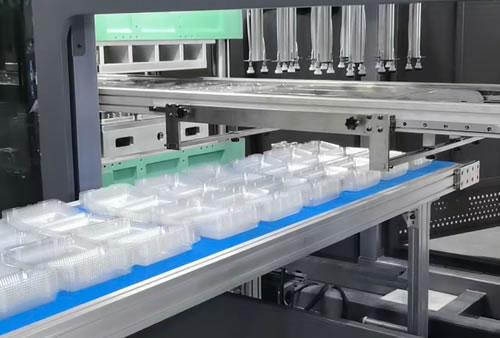
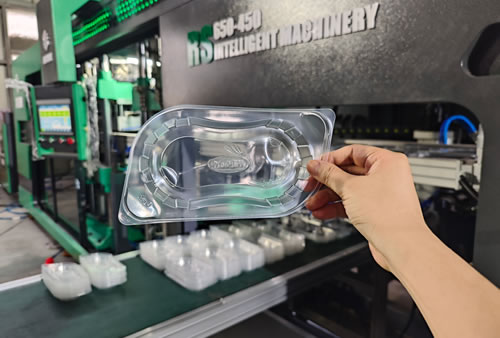
1. Multi‑station thermoformers: Surging orders for fresh‑produce trays and sealing containers boost market demand for 3‑station & 4‑station models including RS‑630‑400, RS‑650‑450 and RS‑750 series. Buyers pay more attention to forming stability, capability switching between deep‑cavity & shallow‑cavity molds, and scrap‑recycling efficiency.
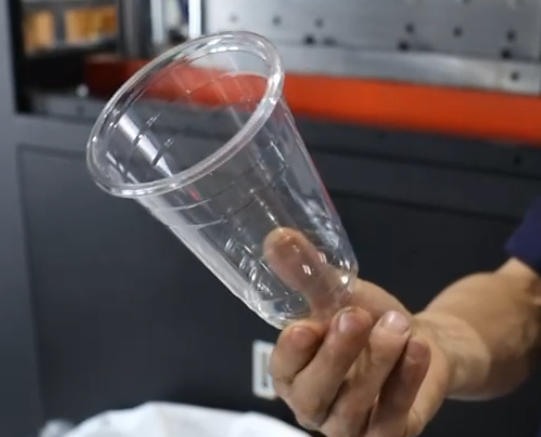
2. RSC cup‑making machines: Domestic market shrinks for single‑use beverage cups. Demands grow for dairy cups, sauce cups, jelly cups and frozen‑food cups. Meanwhile, more trial‑run requests for PLA degradable cups will arrive.
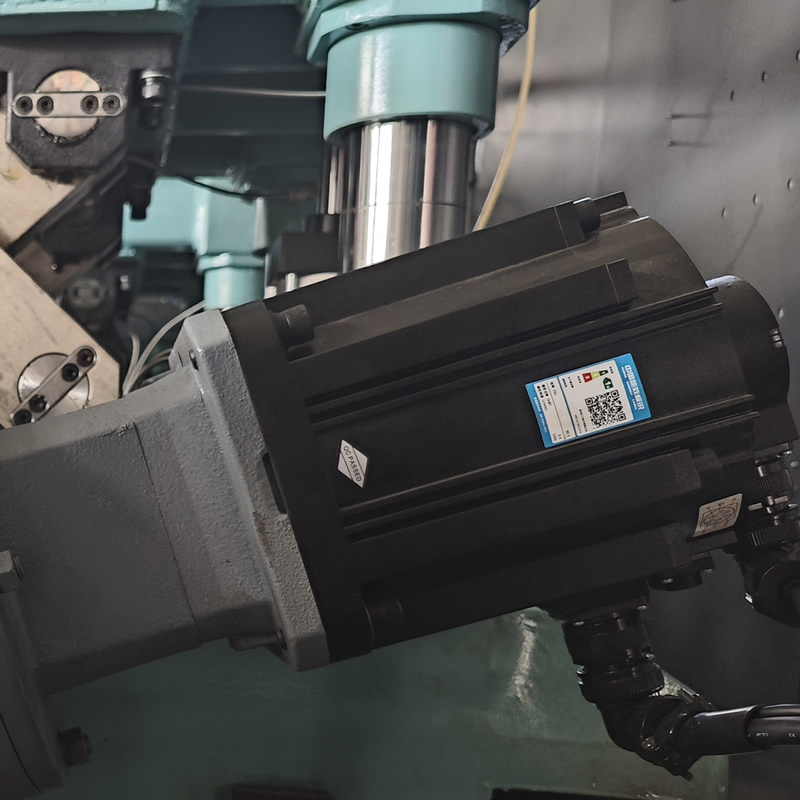
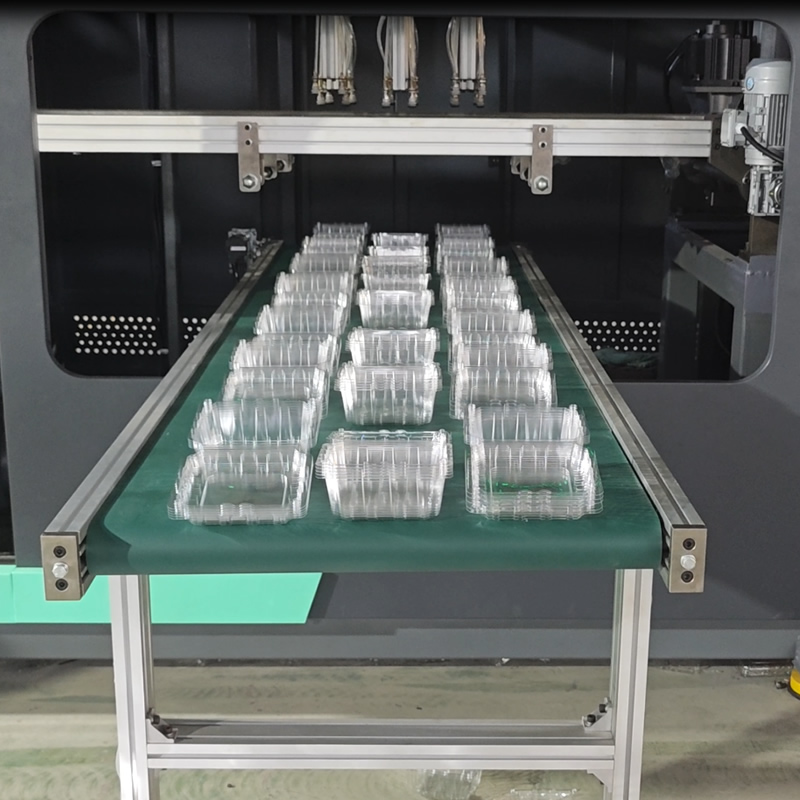
Buyers attach greater importance to servo drive, precise temperature regulation, cooling performance and in‑mold pick‑up robots. Robots reduce scratching and warping, which matters especially for easily‑deformed degradable articles.
Favorable export outlook: Driven by tightened domestic regulations, many packaging manufacturers shift single‑use food‑ware production capacity to overseas markets. EU PPWR and international SUP directives also impose requirements on recycling and recycled‑content ratios. Our full‑servo machines supporting recycled‑material processing fit export‑market requirements well.
⚠️ Challenges
- Simple legacy blister machines will be phased out at an accelerated pace, intensifying market price competition.
- Substantial workload for PLA process tuning. Higher pressure on pre‑sales sampling, technical support and matched mold services.
- Common customer misconception: Some buyers assume PLA products can run perfectly immediately after machine purchase. In reality, stable production relies on the tri‑party match: equipment + sheet formula + mold technology. Expectation gaps must be proactively avoided through pre‑sale communication.
III. Practical Guidelines for Sales Team (For Sales Communication & Official‑Website Knowledge Articles)
1. When engaging new customers, first clarify end‑product application scenarios: whether for takeaway beverage single‑use tableware, or for fresh food / dairy / industrial packaging. Proactively remind customers of domestic regulatory risks.
2. Emphasize core strengths during product introduction: multi‑material compatibility (PLA / PP / PS / recycled r‑PET), high‑precision zoned heating, cooling system and reliable servo performance.
3. Clearly inform customers: Our equipment supports PLA processing. Nevertheless, end‑product regulatory compliance and raw‑material formulation are the sole responsibility of downstream customers. Machines only deliver forming capacity.
4. Segment promotion for different product lines:
- RSC Cup‑making Machine: Position for dairy cups, sauce cups and frozen‑food cups; support trial production for PLA degradable cups.
- RS Multi‑Station Positive‑Negative Pressure Thermoformer: Target fresh‑produce trays, sealing containers and food packaging, compatible with both recycled and degradable materials.

Industrial packaging, fresh‑keeping trays, sealed food packaging, dairy cups, frozen‑food packaging and supermarket inner‑liner packaging are exempted, provided they adopt single‑material design for easy recycling.
Penalties are upgraded from administrative circulars to legal liabilities. Enterprises in violation may face fines up to 100,000 RMB, marking significantly stricter law‑enforcement.
I. Impacts on Downstream Packaging Manufacturers (Our Customers)
1) Risks for Domestic Sales
Single‑use PP/PS cups, lids and takeaway food containers for tea‑drink shops and food delivery are restricted for dine‑in & delivery channels. Many existing production lines manufacturing milk‑tea cups and takeaway containers are facing channel constraints and can no longer supply large volumes to food‑service delivery markets.
Note: It is not that machines cannot process PP material. Instead, end‑product application scenarios are restricted. Production of dairy cups, jelly cups, fresh‑produce trays and frozen‑food containers remains permitted. Products should preferably use single‑material formulas for recyclability. Starch‑blended modified materials shall be avoided, as they hinder recycling.
Two compliant solutions for downstream customers:
- Route A: Switch to PLA fully‑biodegradable sheets to produce degradable cups and containers for dine‑in & delivery use. PLA places drastically different requirements on thermoforming equipment regarding temperature control, heating profile, stretching and cooling. Running PLA on legacy machines tends to cause cracking, warping and defective forming.
- Route B: Manufacture easy‑to‑recycle single‑material products (r‑PET, virgin PP). Shift focus to industrial packaging, fresh‑food supermarket supplies and pre‑packaged sealed food sectors, stepping away from single‑use food‑service for take‑away beverages.
Higher risks for pseudo‑degradable products: Products merely blended with starch or oxo‑degradable additives are not legally qualified degradable goods. Violations trigger direct penalties. Downstream buyers will be more cautious when selecting raw materials and production equipment.
2) Market Opportunities
- Growing retrofitting demand for legacy lines: Many older blister and cup‑making machines feature basic temperature control and cannot stably run PLA degradable materials. This drives demands for equipment retrofitting or new‑machine replacement.
- Industry‑segment transition: Numerous factories are shifting from takeaway cups & containers to fresh‑produce trays, modified‑atmosphere packaging containers, industrial food packaging and cold‑chain packaging. Demand for multi‑station positive‑negative pressure thermoformers for trays & sealing boxes keeps rising. Cup‑making machines are increasingly deployed for yogurt cups, sauce cups and frozen‑food cups.
- Rising orders for r‑PET & r‑PP recycled‑material articles. Equipment must handle high‑content recycled resins, calling for enhanced temperature accuracy and sheet‑feeding stability.
3) Key Pain Points for Downstream Customers
- High raw‑material cost of PLA, together with challenges to maintain acceptable yield rate.
- Outdated heating modules on old equipment lead to high reject rates when processing degradable materials.
- Molds need to be re‑optimized for degradable materials in terms of stretching, venting and cooling performance.
II. Impacts on AIRAYS (Rayshape Machinery) as Equipment Supplier
✅ Opportunities
Multi‑material compatibility becomes a core selling point. When sourcing machinery, buyers no longer only focus on speed and cycle rate. They prioritize whether machines can stably process PLA / PBAT degradable resins and high‑content recycled r‑PET / r‑PP.
AIRAYS RS‑series multi‑station thermoformers and RSC‑series cup‑making machines are originally built for multi‑material processing. Distributed precision temperature control (±1℃) with independent zone heating enables stable forming of degradable materials — this shall be highlighted in external promotion.
Shift in equipment requirements
1. Multi‑station thermoformers: Surging orders for fresh‑produce trays and sealing containers boost market demand for 3‑station & 4‑station models including RS‑630‑400, RS‑650‑450 and RS‑750 series. Buyers pay more attention to forming stability, capability switching between deep‑cavity & shallow‑cavity molds, and scrap‑recycling efficiency.
2. RSC cup‑making machines: Domestic market shrinks for single‑use beverage cups. Demands grow for dairy cups, sauce cups, jelly cups and frozen‑food cups. Meanwhile, more trial‑run requests for PLA degradable cups will arrive.
Buyers attach greater importance to servo drive, precise temperature regulation, cooling performance and in‑mold pick‑up robots. Robots reduce scratching and warping, which matters especially for easily‑deformed degradable articles.
Favorable export outlook: Driven by tightened domestic regulations, many packaging manufacturers shift single‑use food‑ware production capacity to overseas markets. EU PPWR and international SUP directives also impose requirements on recycling and recycled‑content ratios. Our full‑servo machines supporting recycled‑material processing fit export‑market requirements well.
⚠️ Challenges
- Simple legacy blister machines will be phased out at an accelerated pace, intensifying market price competition.
- Substantial workload for PLA process tuning. Higher pressure on pre‑sales sampling, technical support and matched mold services.
- Common customer misconception: Some buyers assume PLA products can run perfectly immediately after machine purchase. In reality, stable production relies on the tri‑party match: equipment + sheet formula + mold technology. Expectation gaps must be proactively avoided through pre‑sale communication.
III. Practical Guidelines for Sales Team (For Sales Communication & Official‑Website Knowledge Articles)
1. When engaging new customers, first clarify end‑product application scenarios: whether for takeaway beverage single‑use tableware, or for fresh food / dairy / industrial packaging. Proactively remind customers of domestic regulatory risks.
2. Emphasize core strengths during product introduction: multi‑material compatibility (PLA / PP / PS / recycled r‑PET), high‑precision zoned heating, cooling system and reliable servo performance.
3. Clearly inform customers: Our equipment supports PLA processing. Nevertheless, end‑product regulatory compliance and raw‑material formulation are the sole responsibility of downstream customers. Machines only deliver forming capacity.
4. Segment promotion for different product lines:
- RSC Cup‑making Machine: Position for dairy cups, sauce cups and frozen‑food cups; support trial production for PLA degradable cups.
- RS Multi‑Station Positive‑Negative Pressure Thermoformer: Target fresh‑produce trays, sealing containers and food packaging, compatible with both recycled and degradable materials.