 language
 English
 Русский
 España
 Français
 عربي
 中文版
Smoking at the die lip for PP sheet production?
Typical PP process reference: barrel 190–220°C, die 200–225°C. The actual melt temperature of PP is often 15~30°C higher than the displayed reading due to shear heating. Thermocouples only measure barrel wall temperature, not melt temperature.
On-site emergency steps (follow in order)
1. Check head pressure and screen pack differential pressure first.
If differential pressure keeps rising, the screen is clogged. High pressure and excessive shear will easily overheat PP and cause smoking. Replace the screen first.
2. Reduce shear heat (more effective than simply lowering temperature)
Lower main screw speed gradually, adjust haul-off speed slightly to keep sheet thickness stable. Reduce backpressure if it is too high.
3. Lower die temperature by 2–3°C each time; avoid dropping more than 5°C at once.
Reduce temperature preferentially at the die lip section and lower die zone. Do not drop barrel temperature sharply, otherwise poor plasticization and surface pits may occur.
4. Gently scrape oily or yellow deposits on die lip with a copper scraper.
Never use steel blades, as scratches on flow channels will lead to recurring carbon buildup and smoking.
5. For models with venting section: check vacuum. Insufficient vacuum fails to remove volatile low-molecular substances, which escape from die lip and create smoke. Keep vacuum stable at -0.08~-0.09 MPa.
If smoke and black specks persist for 5–10 minutes after temperature and speed reduction: stop production and purge with PP purging compound to remove carbon deposits. Severe carbon buildup requires die disassembly and flow channel cleaning.
Four frequent causes for PP smoking (by probability)
① Precipitation and volatilization of additives (very common for regrind, calcium carbonate filled grades with slip agents)
Zinc stearate, PE wax, external slip agents and some masterbatch carriers volatilize easily at high temperature, forming white smoke and oily fouling on die lip.
High regrind content: regrind contains oil contaminants, degraded low-molecular chains from repeated recycling.
Calcium carbonate filled formula: poorly surface-treated CaCO₃ or low heat-stable coupling agent tends to smoke and form deposits.
👉 Solutions: switch to higher temperature resistant slip agents, reduce dosage of external slip; regrind is better to be compounded and devolatilized first; add a small amount of PPA processing aid (several ppm) to reduce die lip buildup.
② Overheating by excessive shear (bluish smoke & burnt smell)
PP is sensitive to shear. High screw speed, fine screen mesh, too small die lip gap or narrow flow passages will generate sharp local shear heat. Even if the set temperature shows 220°C, actual melt temperature may exceed 250°C, causing rapid yellowing and carbonization.
👉 Solutions: reduce main screw speed, widen die lip gap properly, avoid long-time high-pressure running; regularly test real melt temperature with a melt probe.
③ Carbon accumulation in dead zones of die (recurring chronic smoking)
Dead spots, steps in flow channel, scratched die lip, dam block position trap stagnant material. The trapped material oxidizes and carbonizes slowly under constant heat, and is carried out intermittently with melt, causing irregular smoke and occasional black specks.
👉 Feature: runs fine at startup, smoke gradually appears after about half an hour and gets worse over time.
④ Improper heat holding during shutdown, long residence time
Static heating inside the die without material flow leads to easy thermal-oxidative degradation of PP. Heavy smoke and many yellow/black spots will come out once restarted.
👉 Shutdown rule: purge barrel and die with clean virgin PP before shutdown; avoid long idle heating.
Quick judgment
- White smoke, oily smell, oil film on die lip, no black spots → Precipitation of additives / low molecules from regrind; check formula and devolatilization vacuum
- Bluish smoke, burnt odor, burnt buildup, black spots → Overheating degradation; check pressure, screw speed and carbon deposits in die dead zones
- Smoke slowly builds up after running for half an hour, recurs even after cleaning die lip → Carbon in die flow dead zones; purging or die polishing is needed
Long-term prevention
1. When using high regrind ratio, vacuum venting is recommended to reduce volatile content. Dirty regrind should be pelletized and devolatilized before reuse.
2. For filled grades, use CaCO₃ with high-temperature coupling treatment; do not over-add wax slip agents.
3. Replace screen pack once differential pressure reaches set value; do not run under sustained high pressure.
4. Purge material out before shutdown; forbid long static heat preservation.
5. For light-colored food-contact PP, select low-fume grades for slip agents, masterbatches and antioxidants.
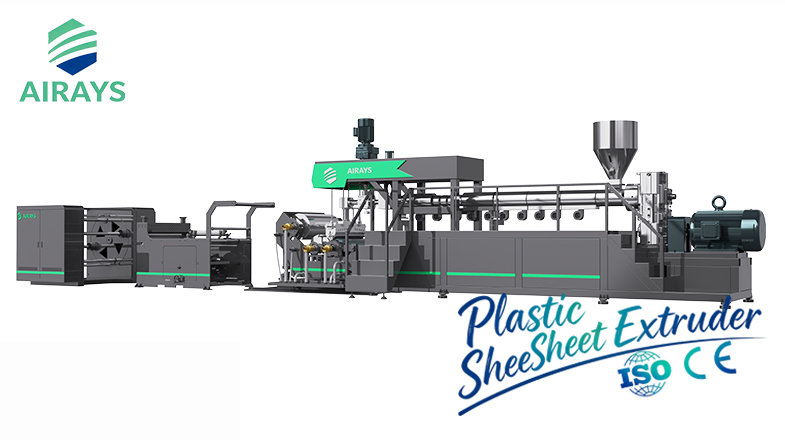
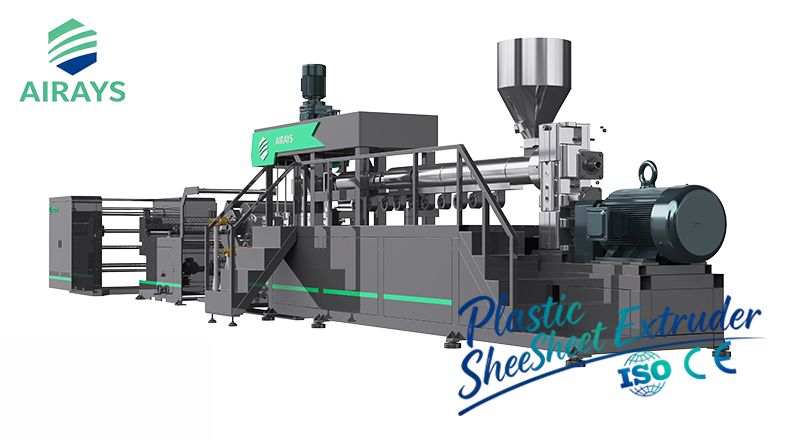
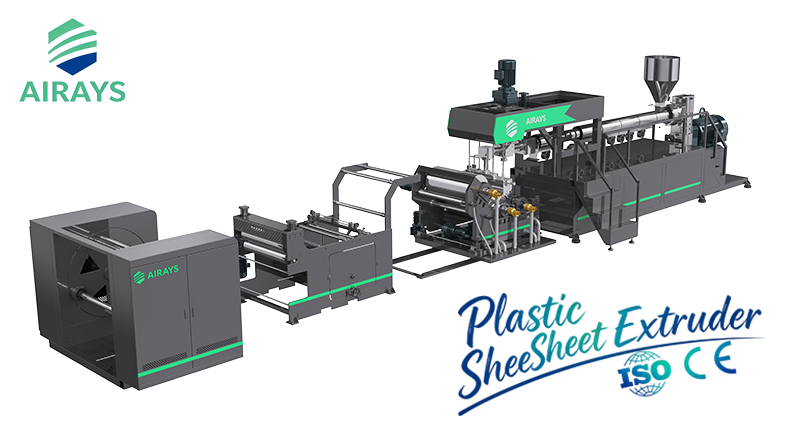
Sheet Extruder Products
Sheet Extruder Videos
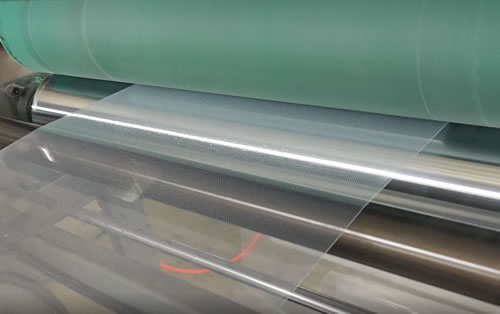
▶
Plastic Sheet Extruder
▶
Plastic extrusion machine

▶
Plastic extrusion equipment
▶
Plastic sheet machine
▶
AIRAYS Achieves Full Customer Satisfaction on PET Sheet Extrusion Machine Factory Acceptance
▶
PET Sheet Machine Shipment to Kyrgyzstan ✈️
▶
PP Sheet Extruder Works Great | Customer Self-Operated ✅
▶
Ultra Clear PET Plastic Sheet | Superior Extrusion Performance
Sheet Extruder News
Rayshape Plastic sheet machine
2025-08-30
Advanced Plastic Sheet Extrusion by Rayshape
2025-08-01
Plastic Sheet Extruder by Wenzhou Rayshape
2025-07-29