 language
 English
 Русский
 España
 Français
 عربي
عربي
 中文版
中文版
how To Distinguish Blister Machine, Multi‑Station Thermoformer, Cup‑Lid Machine and Cup‑Making Machine | AIRAYS

There is a wide variety of plastic thermoforming (commonly known as blister‑forming) equipment. The industry uses many colloquial terms such as multi‑station thermoformer, cup‑lid machine, cup‑making machine and blister machine. Many procurement customers easily mix‑up these machine concepts and misjudge whether a machine fits their target products, which will directly affect actual production‑line output.
As AIRAYS (Wenzhou Rayshape Machinery Co., Ltd.) devotes itself to the R&D and manufacturing of thermoforming equipment, we draw insights from numerous real‑world project deliveries. This article clarifies the differences among these machine types from three dimensions: forming principle, machine structure and applicable finished products. It also answers a frequent industry question: why there are no mass‑production‑oriented positive‑negative pressure cup‑making machines available on the market.
## H2: 1. Blister Machine (General Term for Thermoforming Equipment)
In a broad sense, all machines that heat and soften plastic sheets and shape materials by air pressure can be called blister machines. When the term “blister machine” is used in daily industry conversations, it mostly refers to pure vacuum‑negative‑pressure forming equipment.
‑ Forming method: Only vacuum is generated inside the mold to pull softened sheets against the mold surface.
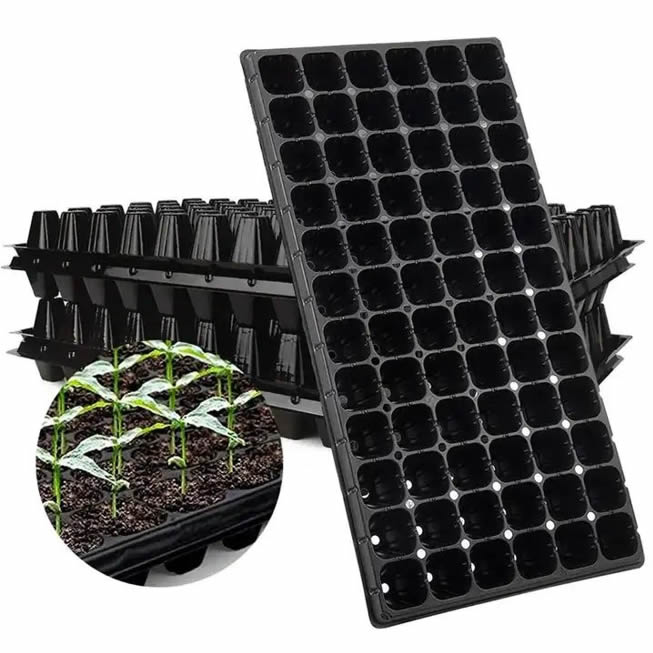
‑ Suitable products: Hardware insert trays, toy housings, general‑purpose packaging shells.
‑ Features: Lower investment for both machine and molds. Limited wall‑thickness consistency under pure‑negative‑pressure drive; moderate definition on sharp corners and details. Rarely adopted for thin‑walled food‑grade food containers.
>
> Important note: The blister machine is a general‑category name. Multi‑station thermoformers, cup‑making machines and cup‑lid machines all belong to thermoforming equipment. A blister‑machine label cannot be simply equated with old‑style pure‑negative‑pressure blister devices.
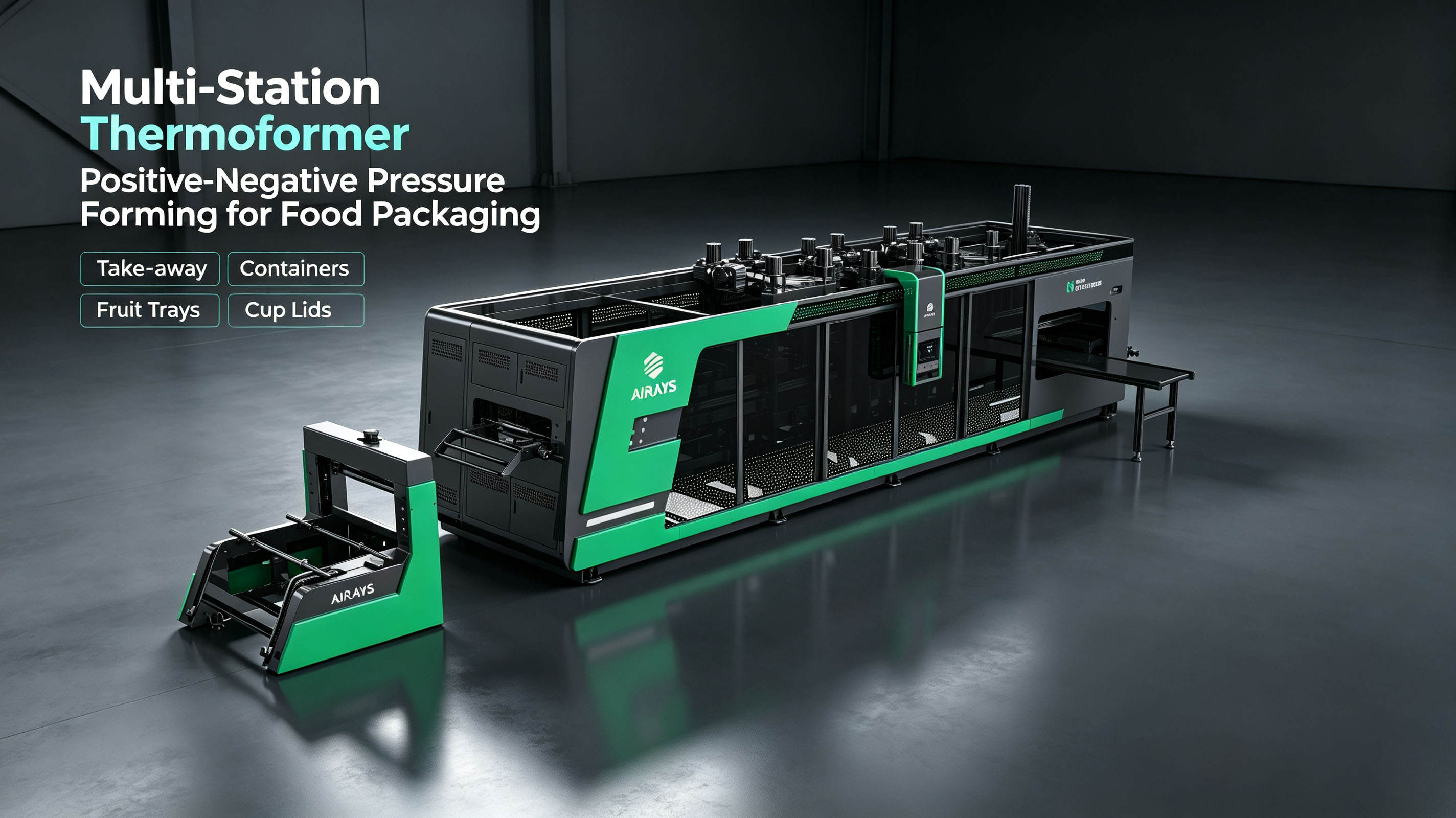
## H2: 2. Multi‑Station Thermoformer (Positive‑Negative Pressure Multi‑Station Thermoforming Machine)
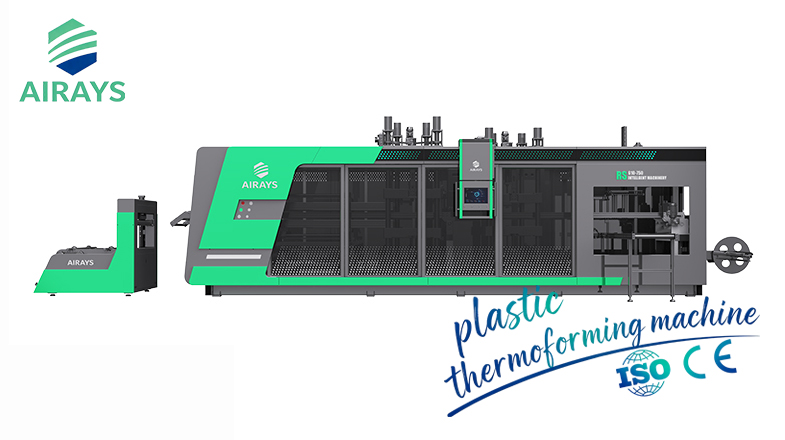
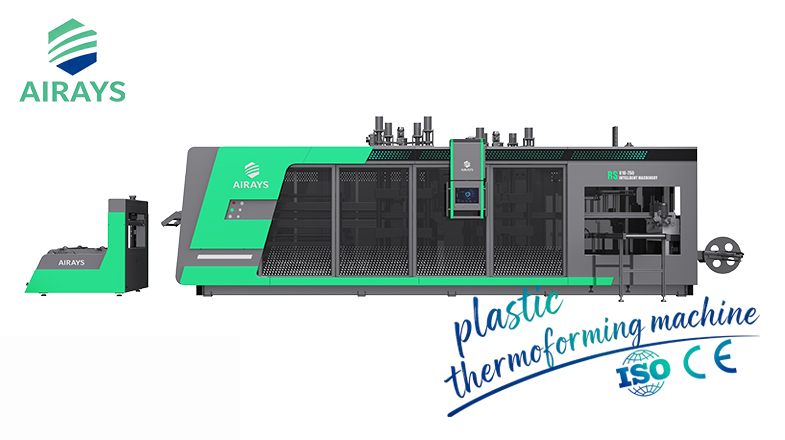
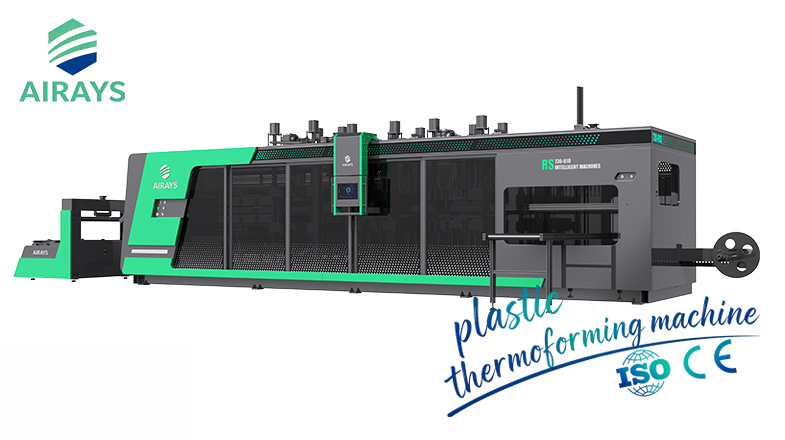
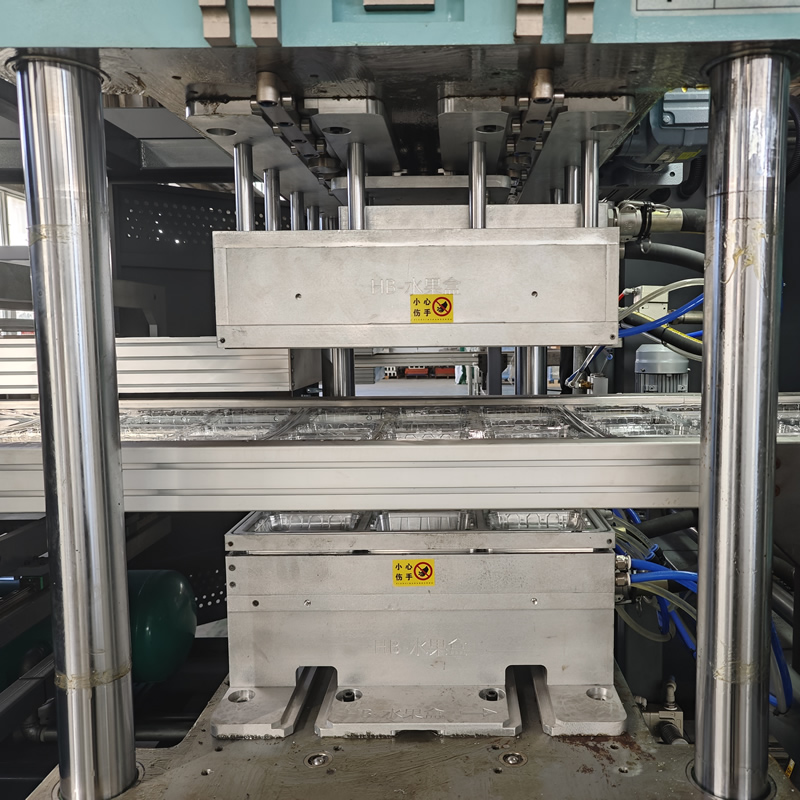
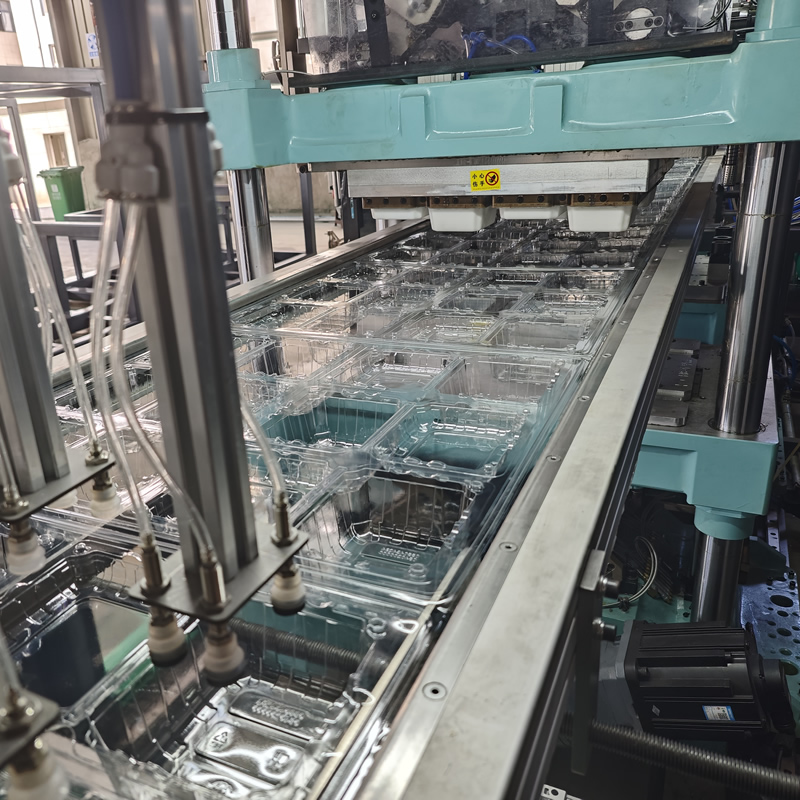
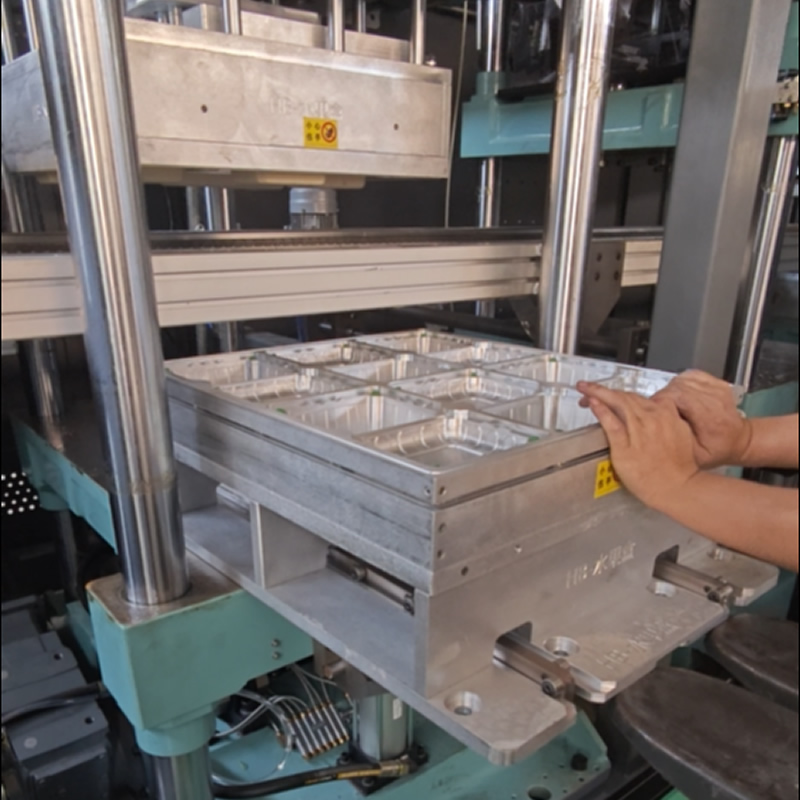
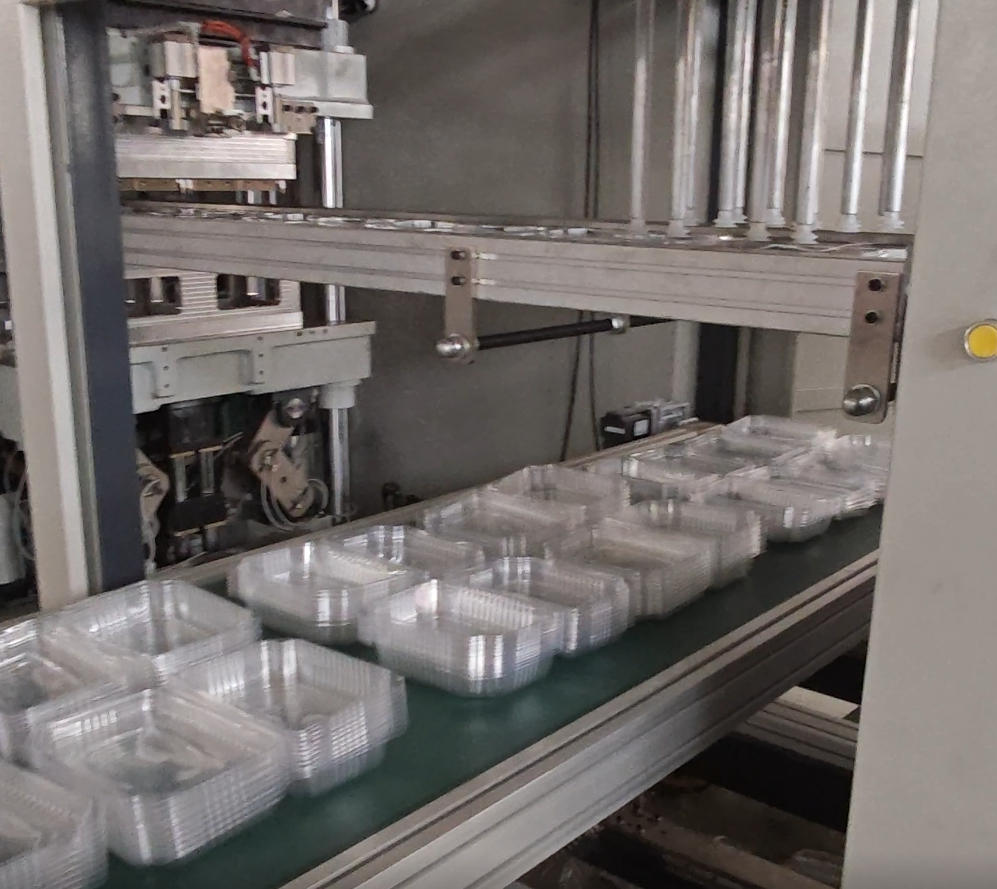
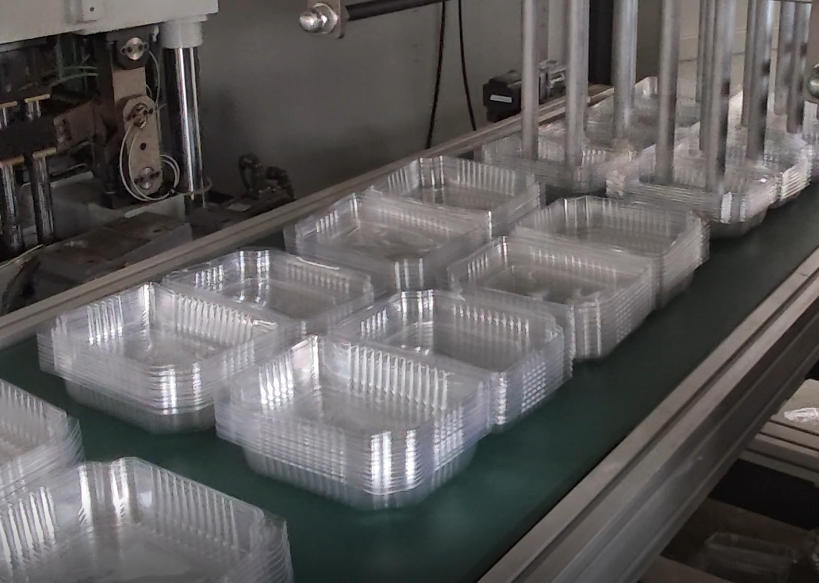
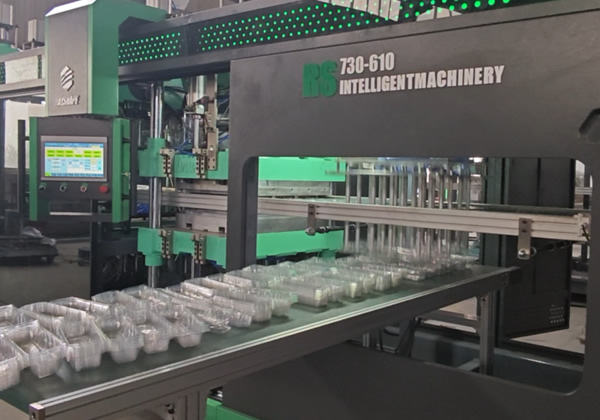
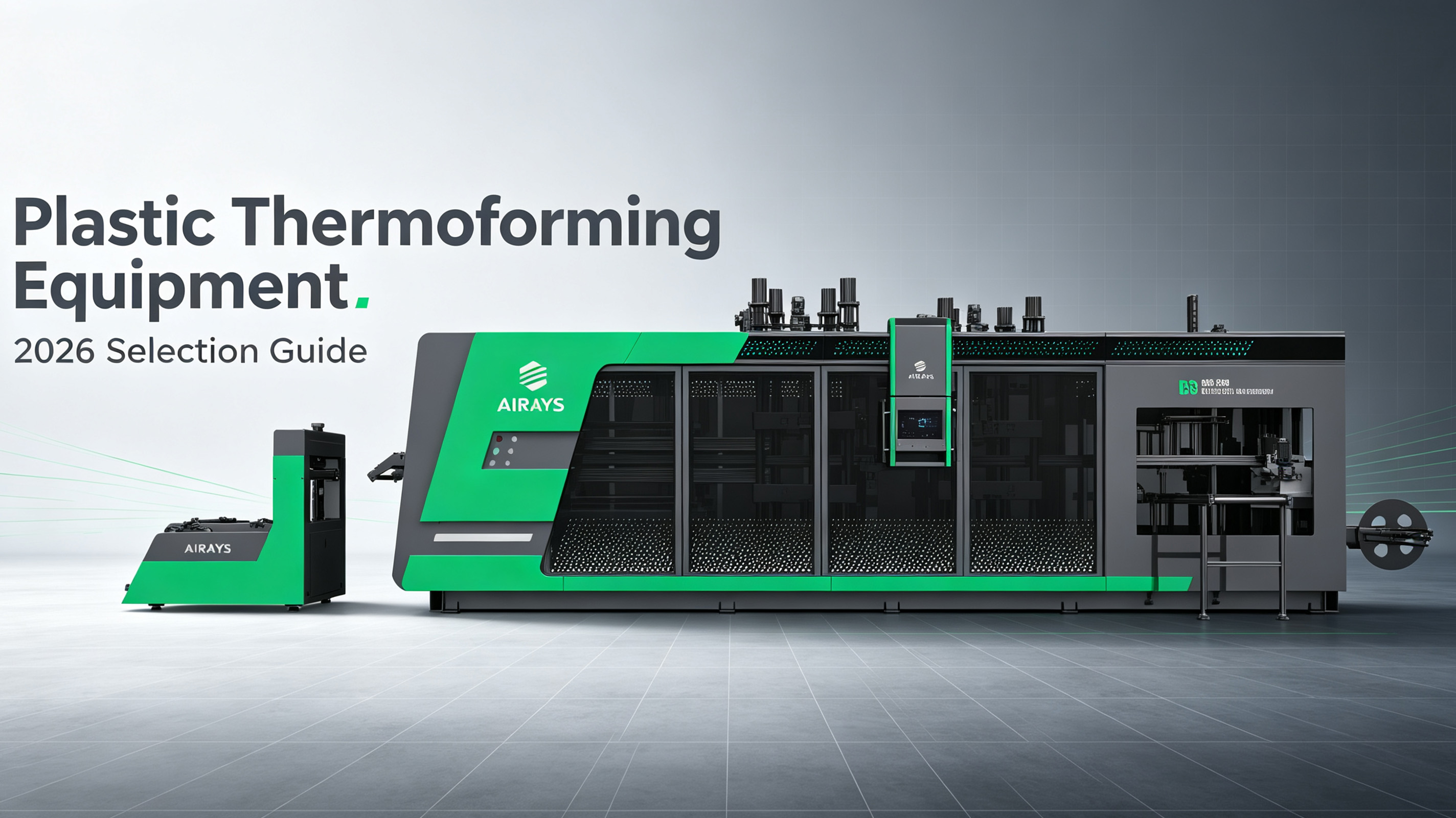
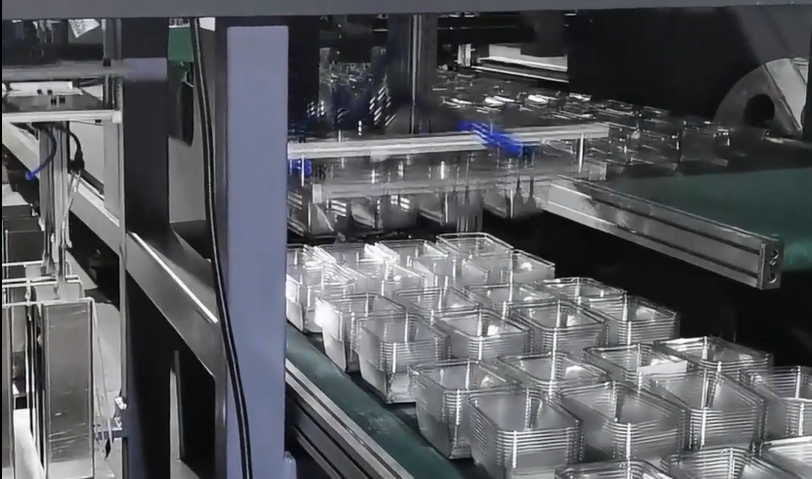
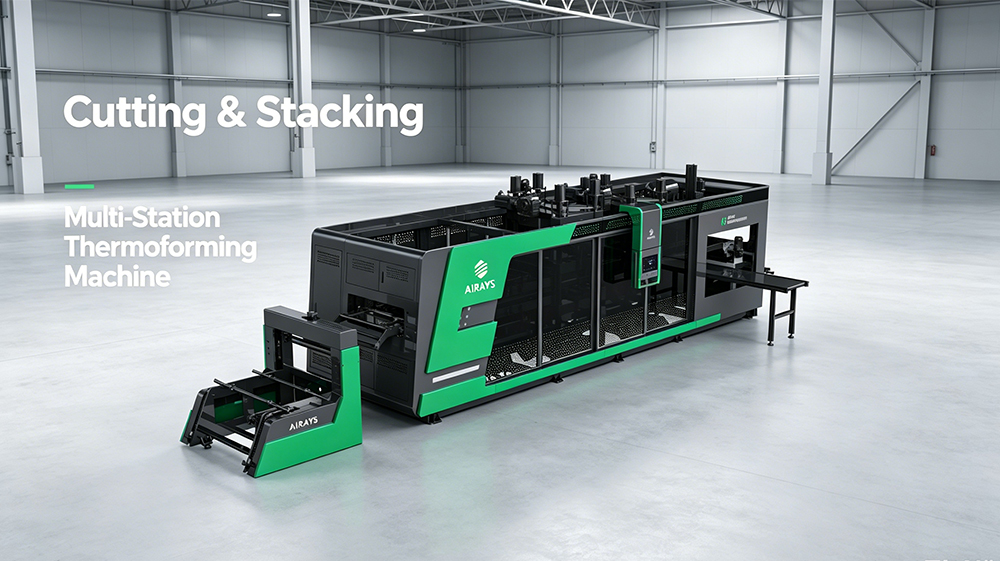
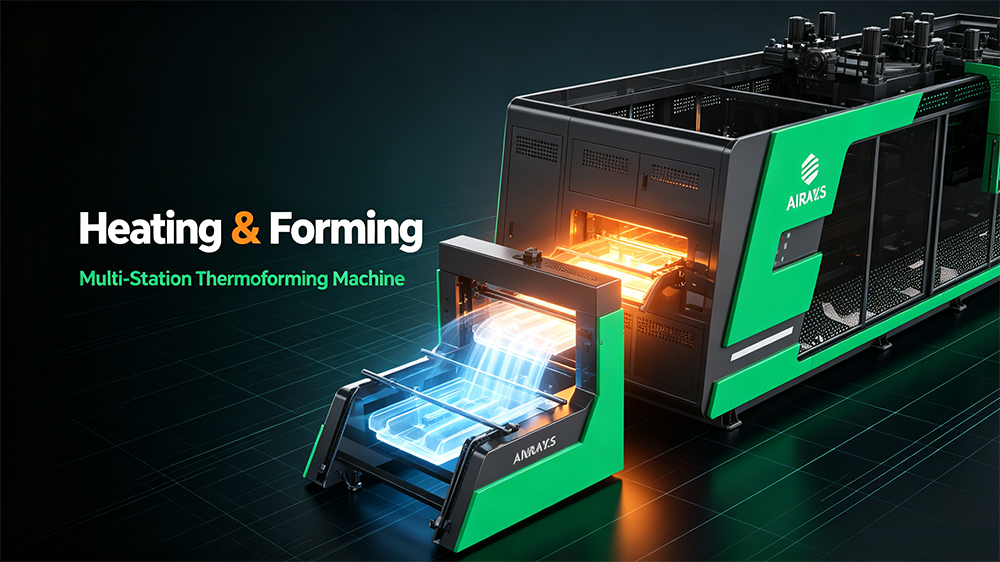
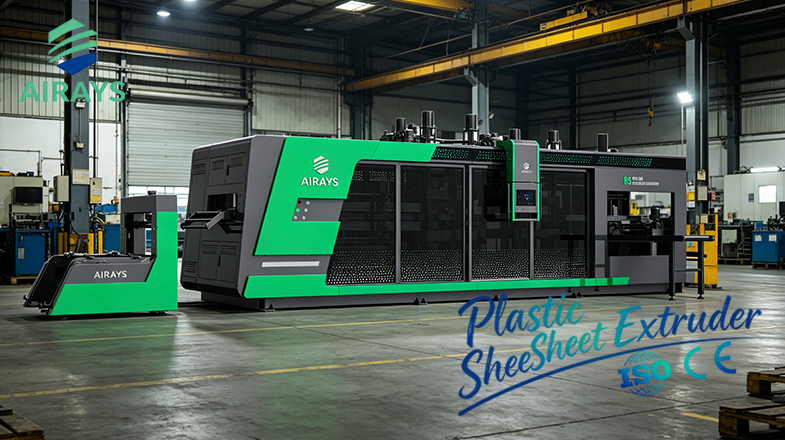
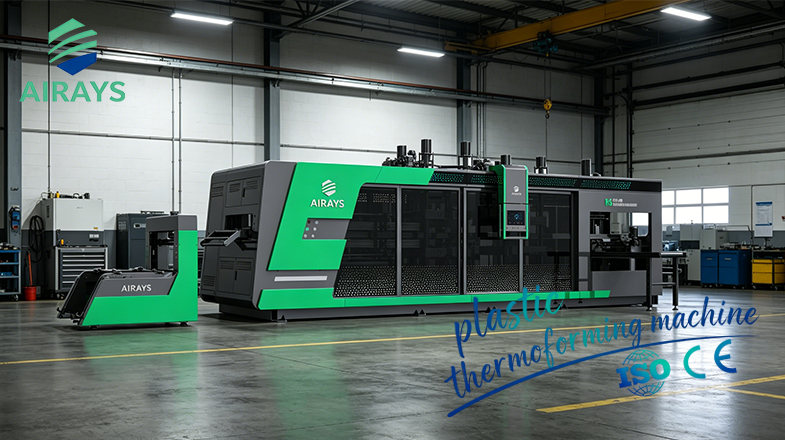
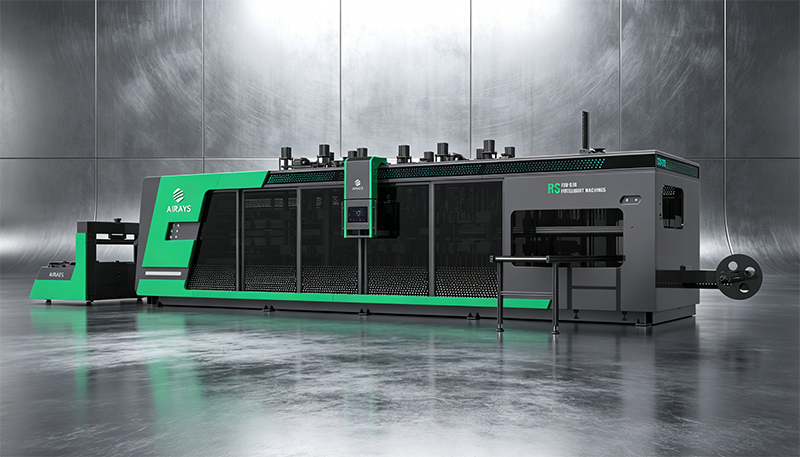
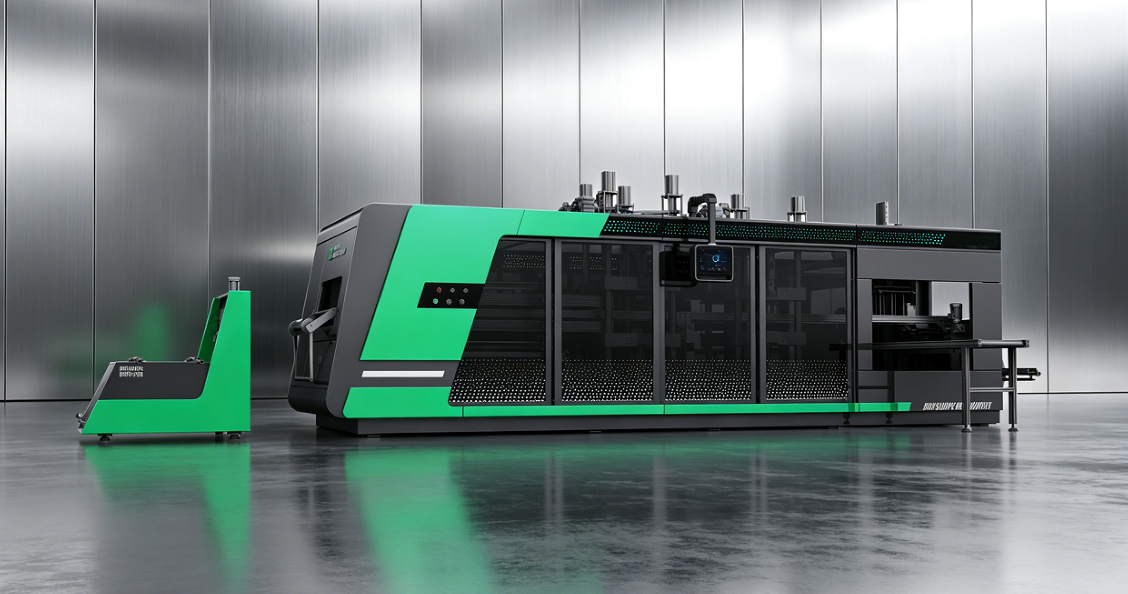
Colloquially called multi‑station machine within the industry, it is the mainstream equipment for food‑grade packaging production. It adopts positive‑negative pressure thermoforming technology, where compressed‑air positive pressure works together with mold vacuum negative pressure. Multiple stations run in parallel cycles, so heating, forming, cutting and stacking proceed simultaneously.
‑ Forming method: Combined positive‑negative pressure forming, without long‑stroke mechanical stretching plugs.
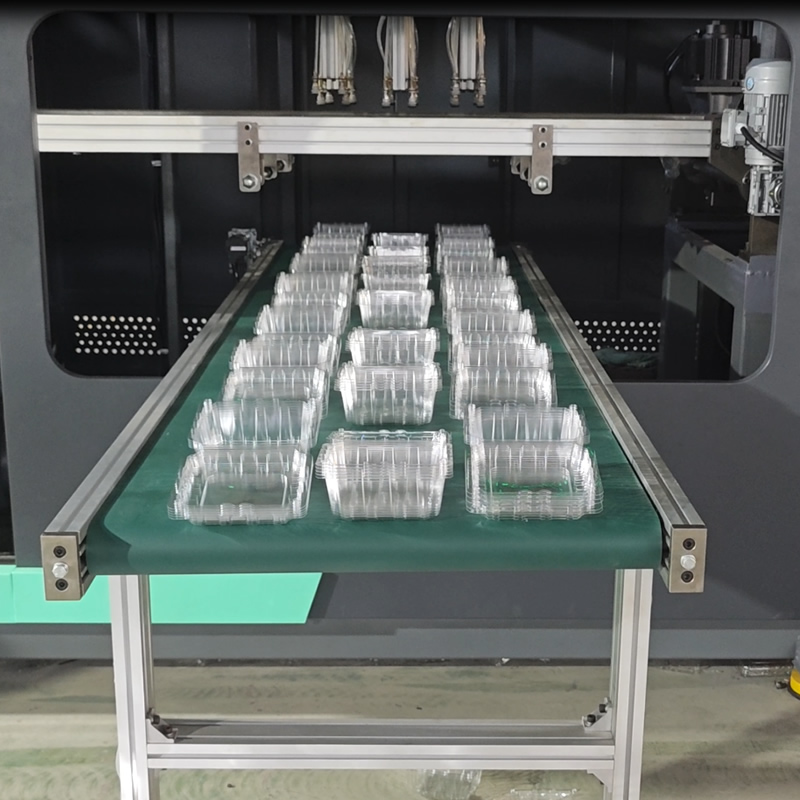
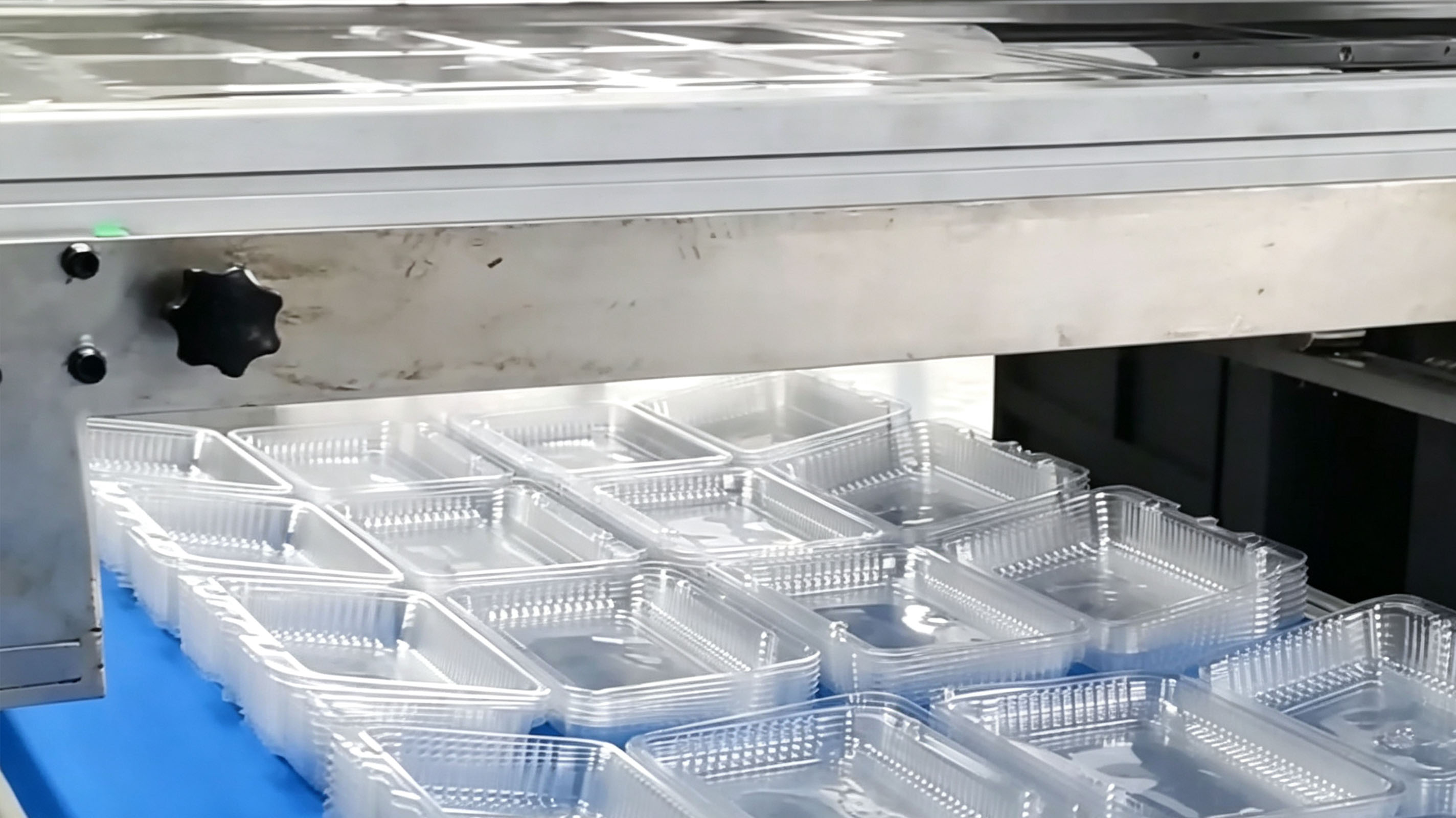
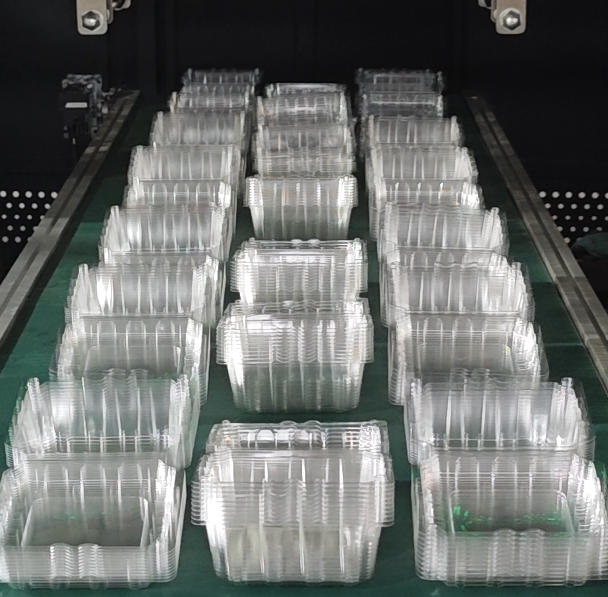
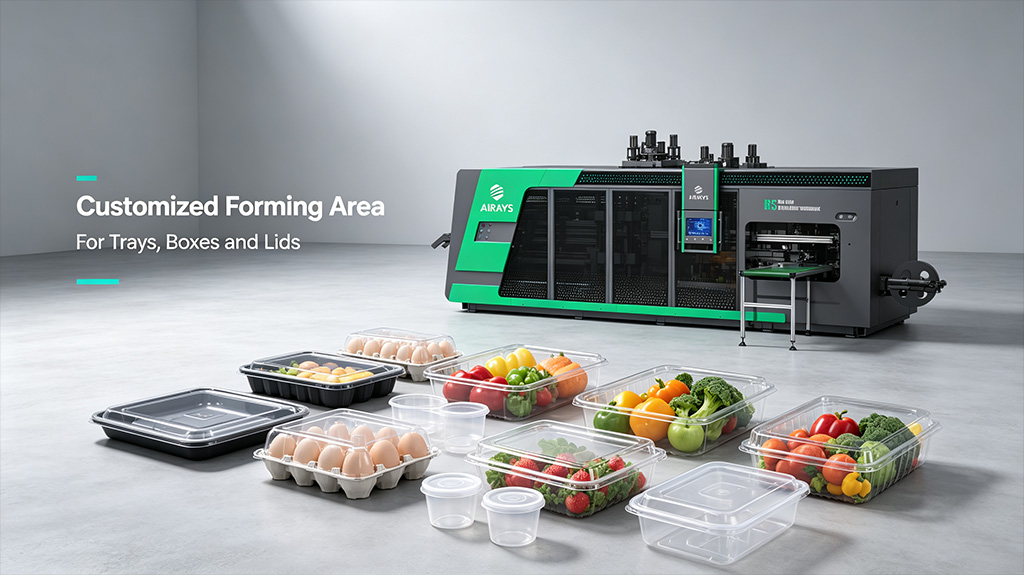
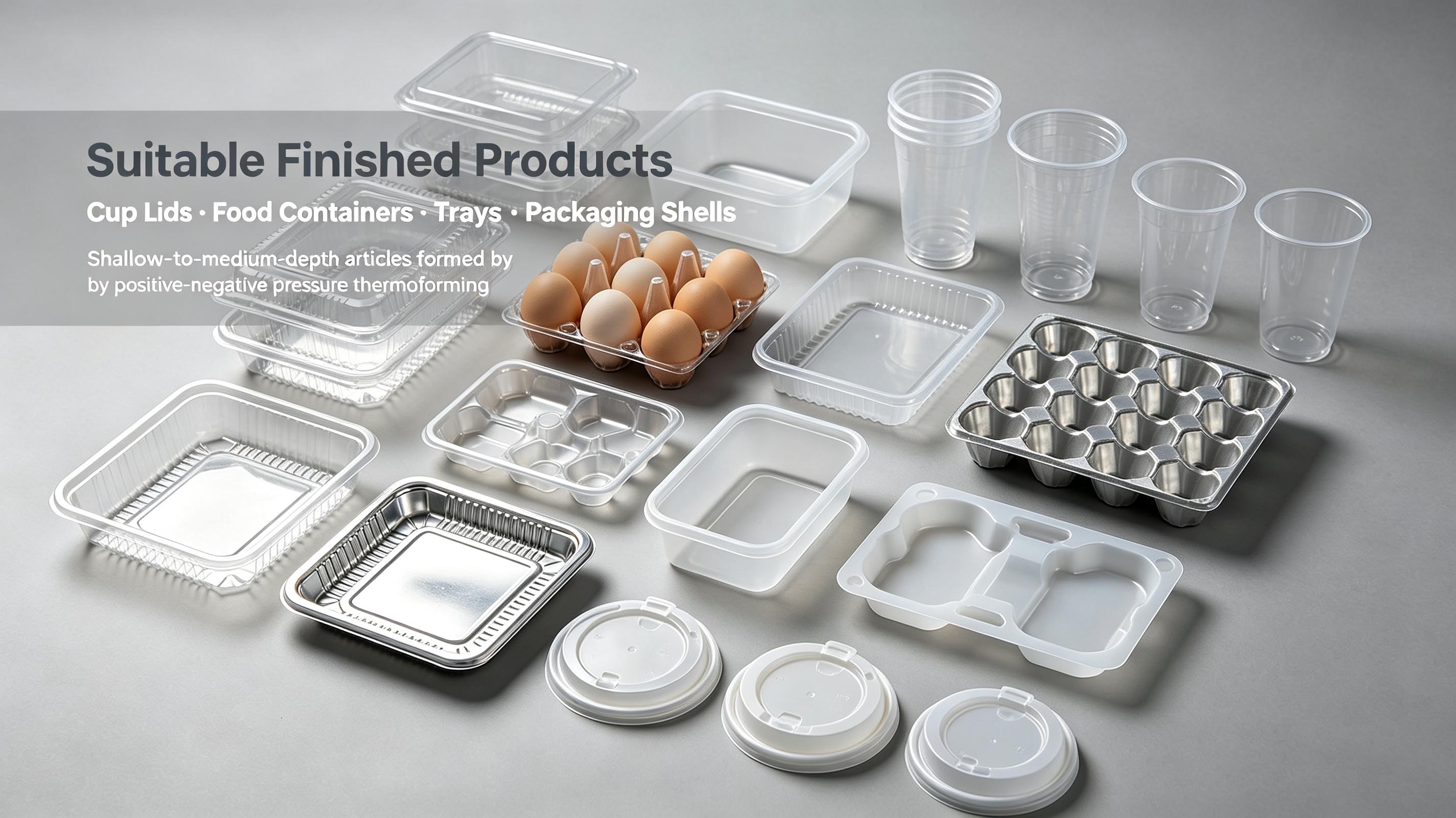
‑ Suitable products: take‑away food containers, fruit trays, plastic cup lids, various shallow‑to‑medium‑depth food‑grade containers.
‑ Features: Sharp‑corner definition and reliable wall‑thickness consistency. Supports fast product switching via mold replacement with strong versatility.
‑ Limitation: Restricted by air‑pressure stretching performance; not ideal for manufacturing deep‑depth disposable drinking‑cup articles.
## H2: 3. Cup‑Lid Machine
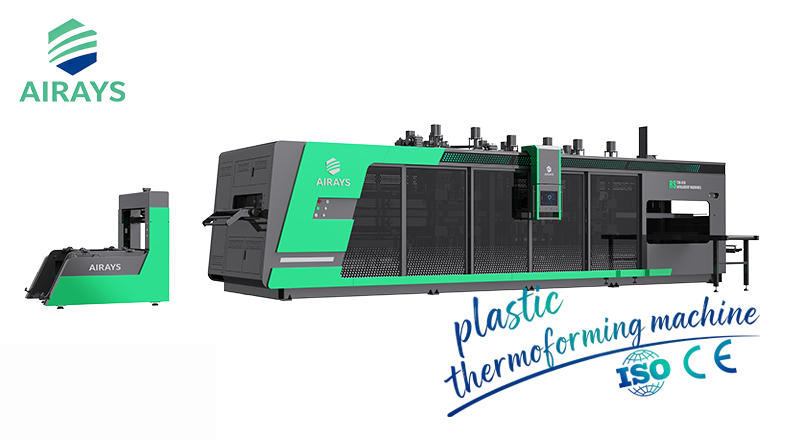
A cup‑lid machine is a custom‑optimized variant derived from multi‑station thermoformer. Built upon positive‑negative‑pressure multi‑station thermoforming technology, its overall structure, cavity layout and stacking unit are specially tuned for mass‑producing cup lids.
‑ Forming method: Positive‑negative pressure forming.
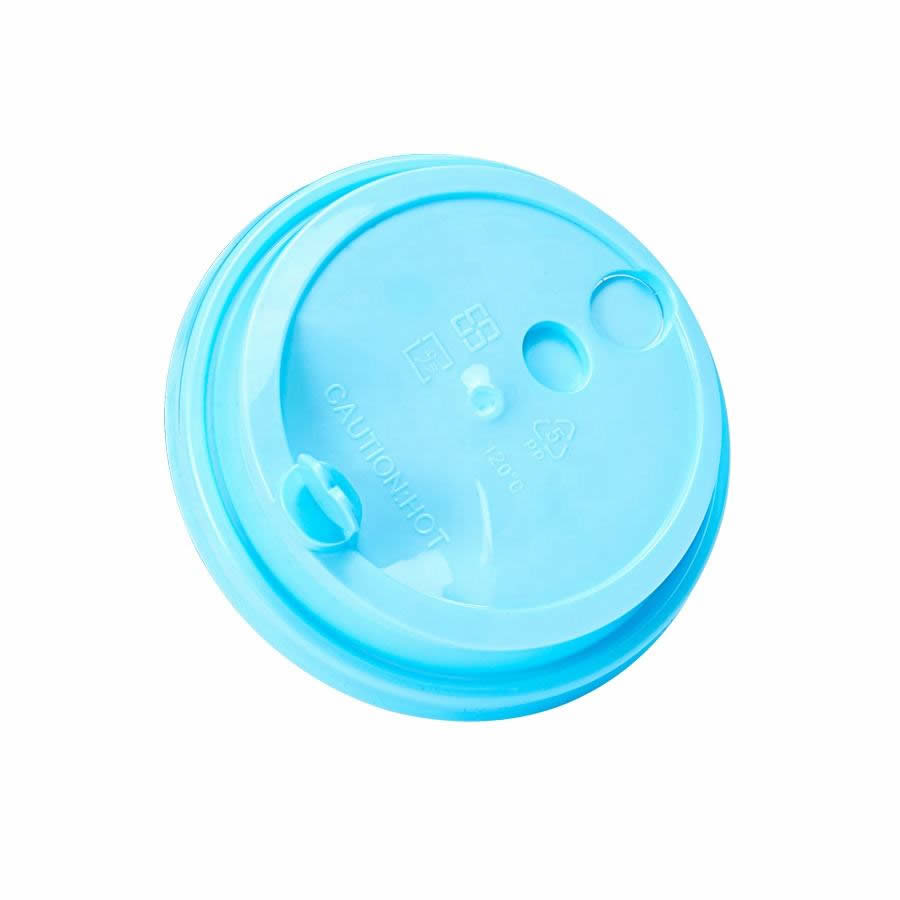
‑ Suitable products: milk‑tea cup lids, take‑away cup lids and various types of plastic cup lids.
‑ Features: Optimized for sealing dimension and edge precision of lids; delivers stable performance under high‑volume cup‑lid mass‑production.
‑ Limitation: Mainly designed for shallow‑profile lid‑type articles. It does not possess forming capacity for deep‑cavity drinking cups.
## H2: 4. Cup‑Making Machine (Pure Positive‑Pressure Forming Machine)
Cup‑making machines (also called cup blow machines in industry slang) are dedicated devices for manufacturing plastic drinking cups and jelly cups. Its core technology combines pure positive‑pressure forming plus pre‑stretching via mechanical stretching plugs.
‑ Forming method: Mechanical stretching plugs push sheets downward for material pre‑distribution first. Then compressed‑air positive pressure blows sheets onto female molds for final shaping. No negative‑vacuum force participates in forming.
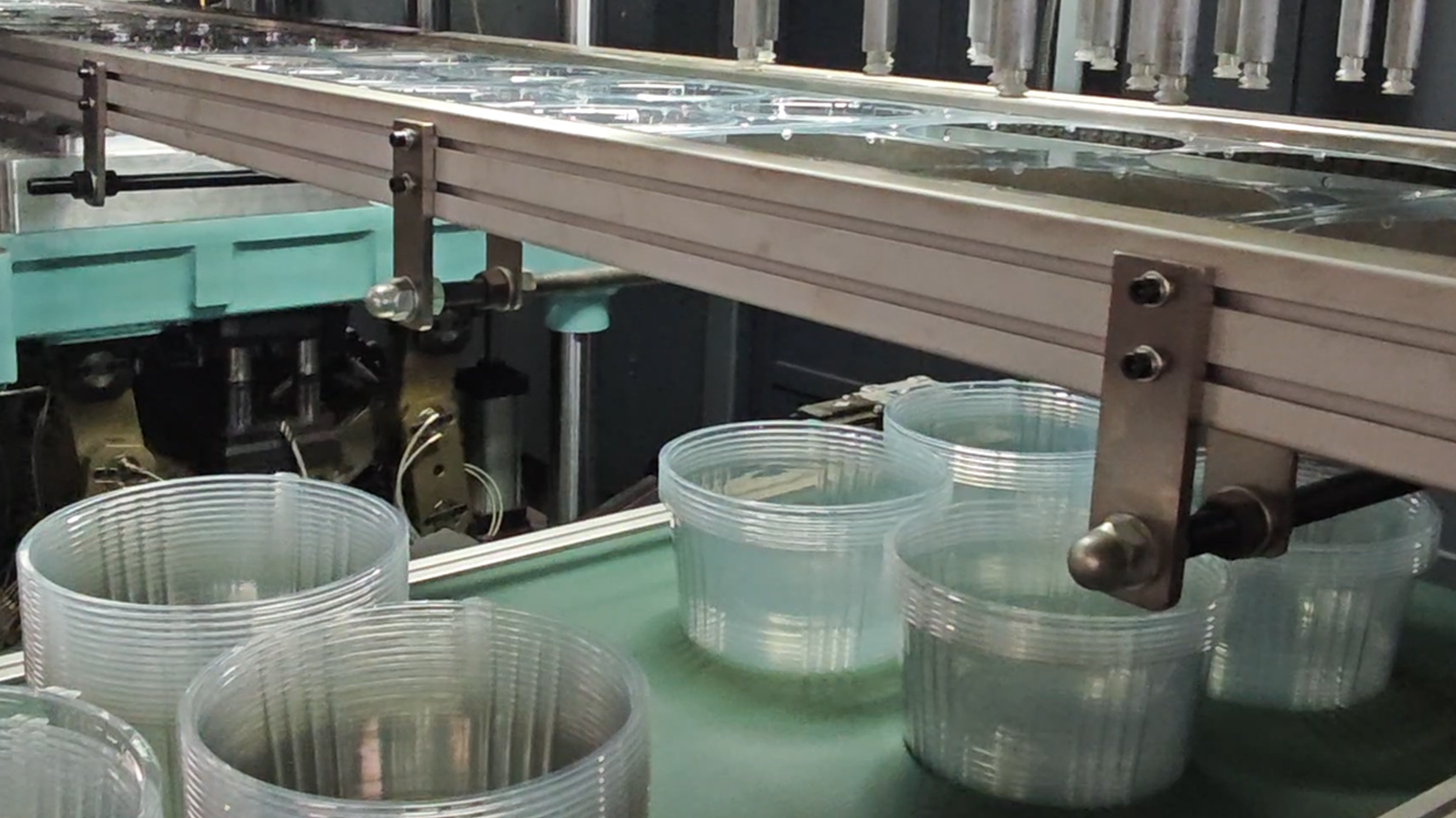
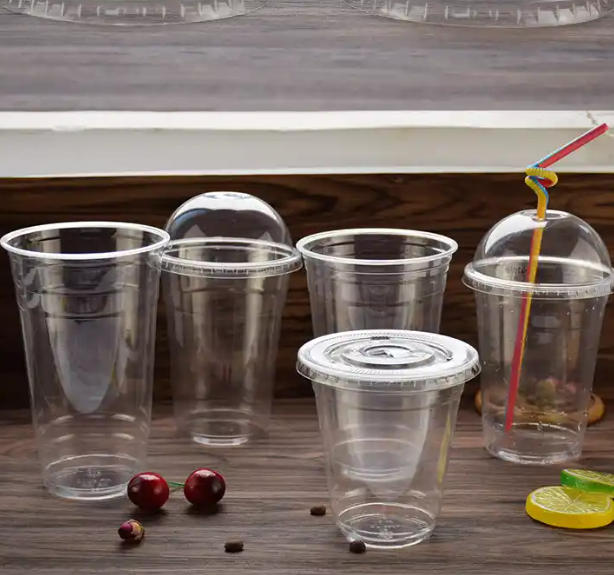
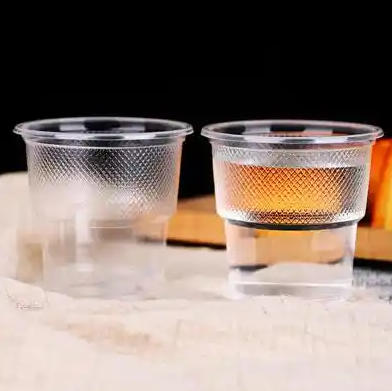
‑ Suitable products: disposable drinking cups, jelly cups, ice‑cream cups and other deep‑drawn thin‑wall containers.
‑ Features: Mechanical pre‑stretching solves thin‑wall thinning and cracking risks for deep‑cavity articles, with high stability for high‑draw‑ratio mass‑production.
>
> Key industry takeaway: Cup‑making machines work purely on positive‑pressure forming and have no positive‑negative‑pressure capability. Positive‑negative‑pressure processing is a technical feature belonging to multi‑station thermoformers.
## H2: 5. Industry Q&A: Why No Mainstream Mass‑Production Positive‑Negative‑Pressure Cup‑Making Machines?
Although custom‑built positive‑negative‑pressure cup‑making prototypes are technically feasible, mature mass‑production‑ready models have not appeared on the market. Three core reasons account for this situation:
### H3: 5.1 Conflicting forming mechanisms
For deep‑cup manufacturing, even wall‑thickness distribution mostly relies on pre‑material‑distribution realized by mechanical stretching plugs. Inside deep cavities, air cushions tend to build‑up. The pulling force from vacuum negative‑pressure drops sharply, and can hardly deliver effective stretching on cup‑bottom materials. Negative pressure brings limited benefits for thin‑wall deep‑cup forming.
### H3: 5.2 Increased process‑related risks
Thin‑wall PP / PS drinking cups feature wall‑thickness of merely 0.2‑0.3 mm. If positive pressure and negative‑vacuum act simultaneously, sheets suffer compound stress. This easily causes whitening‑stretching defects, abnormal molecular stress, unstable demolding shrinkage and elliptical cup deformation. Air‑pressure fluctuation will also interfere with in‑mold cutting and raise reject rates for burrs and flashing edges.
### H3: 5.3 Higher machine‑and‑mold costs with mismatched return‑on‑investment
To achieve positive‑negative‑pressure cup‑making, molds need densely‑distributed vacuum exhaust holes, which interfere physically with stretching plugs and in‑mold cutting blades. This greatly increases mold‑processing difficulty and maintenance costs. The complete machine also requires large‑flow vacuum‑pump sets plus complex timing‑control systems, and the number of adjustable setup parameters multiplies. For factories, procurement costs rise obviously, yet there is no notable improvement in yield rate or output. Therefore large‑scale market adoption does not exist.
Some manufacturers market devices labelled as positive‑negative‑pressure cup‑making machines mostly as marketing gimmicks: their vacuum flow output is extremely weak, and actual forming still depends on pure positive‑pressure plus mechanical stretching. A small number of high‑priced custom flip‑mold units only fit special thick‑wall cup styles and are unsuitable for mass‑producing thin‑wall disposable drinking cups.
‑ For producing take‑away containers, trays and cup lids: Prioritize positive‑negative‑pressure multi‑station thermoformers. Choose dedicated cup‑lid machines if you focus on high‑volume cup‑lid output.
‑ For producing disposable drinking cups and jelly cups: Adopt pure‑positive‑pressure cup‑making machines.
‑ For ordinary hardware packaging and toy housing articles: Select pure‑negative‑pressure blister machines.
As AIRAYS (Wenzhou Rayshape Machinery Co., Ltd.) devotes itself to the R&D and manufacturing of thermoforming equipment, we draw insights from numerous real‑world project deliveries. This article clarifies the differences among these machine types from three dimensions: forming principle, machine structure and applicable finished products. It also answers a frequent industry question: why there are no mass‑production‑oriented positive‑negative pressure cup‑making machines available on the market.
## H2: 1. Blister Machine (General Term for Thermoforming Equipment)
In a broad sense, all machines that heat and soften plastic sheets and shape materials by air pressure can be called blister machines. When the term “blister machine” is used in daily industry conversations, it mostly refers to pure vacuum‑negative‑pressure forming equipment.
‑ Forming method: Only vacuum is generated inside the mold to pull softened sheets against the mold surface.
‑ Suitable products: Hardware insert trays, toy housings, general‑purpose packaging shells.
‑ Features: Lower investment for both machine and molds. Limited wall‑thickness consistency under pure‑negative‑pressure drive; moderate definition on sharp corners and details. Rarely adopted for thin‑walled food‑grade food containers.
>
> Important note: The blister machine is a general‑category name. Multi‑station thermoformers, cup‑making machines and cup‑lid machines all belong to thermoforming equipment. A blister‑machine label cannot be simply equated with old‑style pure‑negative‑pressure blister devices.
## H2: 2. Multi‑Station Thermoformer (Positive‑Negative Pressure Multi‑Station Thermoforming Machine)
Colloquially called multi‑station machine within the industry, it is the mainstream equipment for food‑grade packaging production. It adopts positive‑negative pressure thermoforming technology, where compressed‑air positive pressure works together with mold vacuum negative pressure. Multiple stations run in parallel cycles, so heating, forming, cutting and stacking proceed simultaneously.
‑ Forming method: Combined positive‑negative pressure forming, without long‑stroke mechanical stretching plugs.
‑ Suitable products: take‑away food containers, fruit trays, plastic cup lids, various shallow‑to‑medium‑depth food‑grade containers.
‑ Features: Sharp‑corner definition and reliable wall‑thickness consistency. Supports fast product switching via mold replacement with strong versatility.
‑ Limitation: Restricted by air‑pressure stretching performance; not ideal for manufacturing deep‑depth disposable drinking‑cup articles.
## H2: 3. Cup‑Lid Machine
A cup‑lid machine is a custom‑optimized variant derived from multi‑station thermoformer. Built upon positive‑negative‑pressure multi‑station thermoforming technology, its overall structure, cavity layout and stacking unit are specially tuned for mass‑producing cup lids.
‑ Forming method: Positive‑negative pressure forming.
‑ Suitable products: milk‑tea cup lids, take‑away cup lids and various types of plastic cup lids.
‑ Features: Optimized for sealing dimension and edge precision of lids; delivers stable performance under high‑volume cup‑lid mass‑production.
‑ Limitation: Mainly designed for shallow‑profile lid‑type articles. It does not possess forming capacity for deep‑cavity drinking cups.
## H2: 4. Cup‑Making Machine (Pure Positive‑Pressure Forming Machine)
Cup‑making machines (also called cup blow machines in industry slang) are dedicated devices for manufacturing plastic drinking cups and jelly cups. Its core technology combines pure positive‑pressure forming plus pre‑stretching via mechanical stretching plugs.
‑ Forming method: Mechanical stretching plugs push sheets downward for material pre‑distribution first. Then compressed‑air positive pressure blows sheets onto female molds for final shaping. No negative‑vacuum force participates in forming.
‑ Suitable products: disposable drinking cups, jelly cups, ice‑cream cups and other deep‑drawn thin‑wall containers.
‑ Features: Mechanical pre‑stretching solves thin‑wall thinning and cracking risks for deep‑cavity articles, with high stability for high‑draw‑ratio mass‑production.
>
> Key industry takeaway: Cup‑making machines work purely on positive‑pressure forming and have no positive‑negative‑pressure capability. Positive‑negative‑pressure processing is a technical feature belonging to multi‑station thermoformers.
## H2: 5. Industry Q&A: Why No Mainstream Mass‑Production Positive‑Negative‑Pressure Cup‑Making Machines?
Although custom‑built positive‑negative‑pressure cup‑making prototypes are technically feasible, mature mass‑production‑ready models have not appeared on the market. Three core reasons account for this situation:
### H3: 5.1 Conflicting forming mechanisms
For deep‑cup manufacturing, even wall‑thickness distribution mostly relies on pre‑material‑distribution realized by mechanical stretching plugs. Inside deep cavities, air cushions tend to build‑up. The pulling force from vacuum negative‑pressure drops sharply, and can hardly deliver effective stretching on cup‑bottom materials. Negative pressure brings limited benefits for thin‑wall deep‑cup forming.
### H3: 5.2 Increased process‑related risks
Thin‑wall PP / PS drinking cups feature wall‑thickness of merely 0.2‑0.3 mm. If positive pressure and negative‑vacuum act simultaneously, sheets suffer compound stress. This easily causes whitening‑stretching defects, abnormal molecular stress, unstable demolding shrinkage and elliptical cup deformation. Air‑pressure fluctuation will also interfere with in‑mold cutting and raise reject rates for burrs and flashing edges.
### H3: 5.3 Higher machine‑and‑mold costs with mismatched return‑on‑investment
To achieve positive‑negative‑pressure cup‑making, molds need densely‑distributed vacuum exhaust holes, which interfere physically with stretching plugs and in‑mold cutting blades. This greatly increases mold‑processing difficulty and maintenance costs. The complete machine also requires large‑flow vacuum‑pump sets plus complex timing‑control systems, and the number of adjustable setup parameters multiplies. For factories, procurement costs rise obviously, yet there is no notable improvement in yield rate or output. Therefore large‑scale market adoption does not exist.
Some manufacturers market devices labelled as positive‑negative‑pressure cup‑making machines mostly as marketing gimmicks: their vacuum flow output is extremely weak, and actual forming still depends on pure positive‑pressure plus mechanical stretching. A small number of high‑priced custom flip‑mold units only fit special thick‑wall cup styles and are unsuitable for mass‑producing thin‑wall disposable drinking cups.
## H2: 6. Summary for Equipment Selection Reference
|
Equipment Name |
Forming Process |
Primary Products |
Key Remarks |
|
Ordinary Blister Machine |
Pure negative pressure |
General‑purpose packaging, hardware trays |
Rarely used for thin‑walled food‑grade containers |
|
Multi‑Station Thermoformer |
Positive‑negative pressure |
Food containers, trays, cup lids |
High versatility for shallow‑to‑medium‑depth articles |
|
Cup‑Lid Machine |
Positive‑negative pressure |
All kinds of plastic cup lids |
Custom‑built multi‑station variant; for lids only, not for cups |
|
Cup‑Making Machine |
Pure positive pressure + mechanical stretching |
Drinking cups, jelly cups |
Specialized for deep‑draw containers, no vacuum‑negative‑pressure forming |
‑ For producing disposable drinking cups and jelly cups: Adopt pure‑positive‑pressure cup‑making machines.
‑ For ordinary hardware packaging and toy housing articles: Select pure‑negative‑pressure blister machines.